



































US Supreme Court Strengthens Privacy Rights by Limiting Geofence Warrants
The US Supreme Court ruled that geofence warrants are subject to Fourth Amendment privacy protections, limiting broad location-data searches by law enforcement and strengthening digital privacy rights.
The U.S. Supreme Court on Monday issued a landmark ruling that significantly limits how law enforcement agencies can use geofence warrants, a decision expected to have wide-ranging implications for digital privacy rights and criminal investigations across the United States.
In a 6-3 decision, the nation’s highest Court ruled that “an individual has a reasonable expectation of privacy in his cell-phone location information.” The Court concluded that people retain constitutional privacy protections over the location history generated by their mobile phones, including information collected through the apps and services running on those devices.
As a result, the Supreme Court held that law enforcement agencies must obtain a search warrant before requesting user location information from technology companies, including historical geofence data.
The Court reasoned that simply using services provided by companies like Google does not mean individuals voluntarily surrender their location information. Therefore, the so-called “third-party doctrine” does not automatically apply. Under that legal doctrine, people generally lose an expectation of privacy for information they knowingly share with third parties, allowing authorities to obtain certain records, such as telecommunications data, without first securing a search warrant.
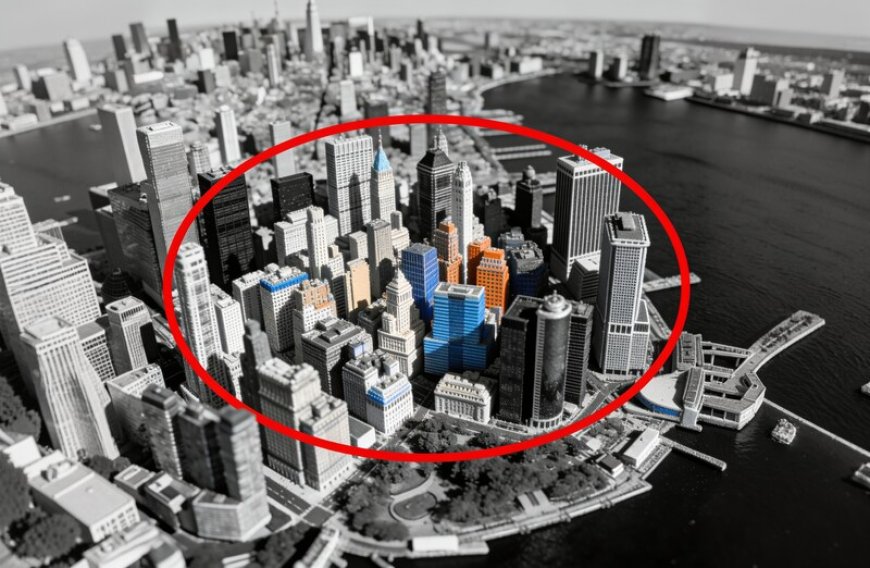
Geofence warrants enable investigators to compel technology companies to provide information showing which users were present in a specific geographic area during a particular period, based on location records stored in the companies’ databases. In practice, investigators define a geographic boundary on a digital map and ask a judge to authorise a request requiring companies such as Google to search through their vast stores of user location data and identify devices located within that area at the specified time.
Privacy advocates have long argued that these so-called “reverse” search warrants violate constitutional protections because they are inherently broad and often sweep up data belonging to large numbers of innocent individuals.
The Supreme Court appeared to agree with many of those concerns but stopped short of completely prohibiting geofence warrants. Instead, the ruling allows investigators to continue requesting geofence information, provided they first obtain a valid search warrant supported by appropriate legal standards.
In effect, the Court ruled that the Fourth Amendment, which protects against unreasonable searches and seizures, extends to location data collected from users’ mobile devices by companies such as Google. The decision does not prevent authorities from accessing historical location information, but it requires investigators to demonstrate probable cause and obtain a search warrant before accessing geofence records.
The ruling stems from the case of Chatrie v. United States, in which Okello Chatrie challenged thegovernment’ss use of evidence gathered through a geofence warrant during his bank robbery trial. His legal team argued that geofence warrants effectively allow investigators to search broadly for potential suspects before developing evidence against any specific individual, reversing the traditional legal process governing searches and seizures.
Ordinarily, investigators must establish probable cause connecting a particular person to a suspected crime before a court authorises a search warrant. Critics have maintained that geofence warrants invert that process by collecting information first and identifying suspects afterwards.
The Supreme Court agreed to hear the case after lower courts across the country reached conflicting conclusions regarding the constitutionality of geofence warrants, including disagreements among federal appeals courts.
It remains unclear howMonday’ss decision will affect previous criminal cases involving geofence evidence. The U.S. Department of Justice did not immediately respond to requests for comment following the ruling.
The Court’s decision is not expected to alter Chatrie’s sentence because earlier courts determined that investigators acted in good faith in relying on the geofence warrant in effect at the time.
Instead, the Supreme Court directed the Appeals Court to determine whether the search warrant issued in Chatrie’s case satisfied the probable cause requirement and was therefore constitutionally valid.
Some technology companies that have frequently received geofence warrant requests, including Google, have already begun changing how location information is stored by keeping much of that data directly on users’ devices rather than on company servers. That shift has reduced the amount of information available to provide in response to law enforcement requests and increasingly requires investigators to seek data directly from device owners. Other companies, including Microsoft, Uber, and Yahoo, continue to receive geofence warrant requests regularly because they also maintain location-related data.
What's Your Reaction?
 Like
0
Like
0
 Dislike
0
Dislike
0
 Love
0
Love
0
 Funny
0
Funny
0
 Angry
0
Angry
0
 Sad
0
Sad
0
 Wow
0
Wow
0