



































Microsoft Quietly Drops Its 32GB RAM Advice for Windows 11
Microsoft removes its 32GB RAM advice for Windows 11 as memory costs rise, while 4GB remains the minimum and Copilot+ PCs require at least 16GB of RAM.
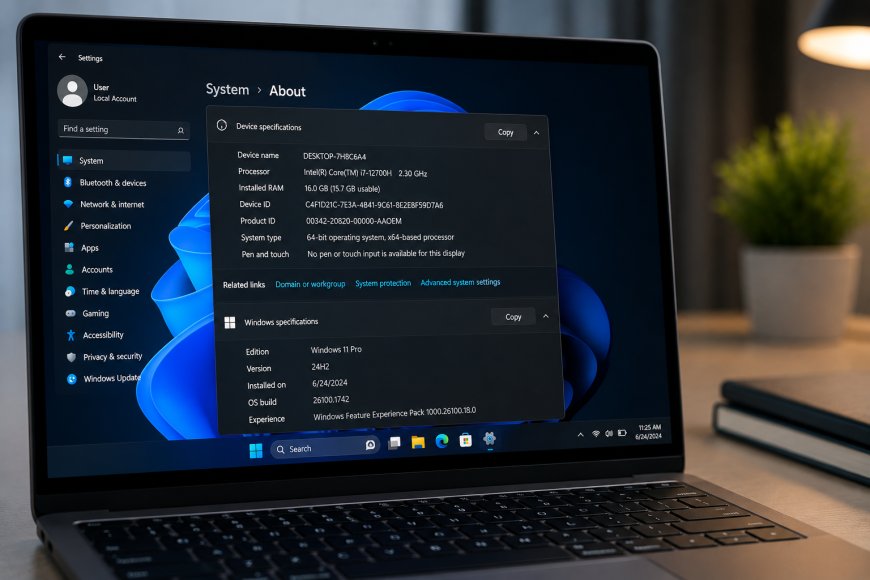
Microsoft has removed Windows 11 guidance that previously recommended 32GB of RAM for demanding gaming and multitasking, a notable change as memory prices remain elevated and the company works to improve Windows performance on lower-memory PCs.
The deleted material came from Microsoft’s Windows Learning Centre. One guide described 32GB as an ideal configuration for serious gamers who play demanding titles or use heavy modifications. In contrast, another described 32GB as a more future-proof, “no-worries” level for gaming.
Those recommendations are no longer available on Microsoft’s site. The affected URLs now redirect away from the original guidance, according to reports from Windows Latest and PCWorld.
The removal does not mean Microsoft has changed the official minimum hardware requirement for Windows 11.
Microsoft’s current specifications page still lists just 4GB of RAM as the minimum requirement for installing Windows 11. Copilot+ PCs, however, require at least 16GB of DDR5 or LPDDR5 memory, along with a compatible processor containing an NPU capable of more than 40 TOPS.
Microsoft Is Focusing More on Lower-Memory PCs
The timing of the deleted guidance is particularly notable because Microsoft has also been working to reduce Windows 11’s memory footprint.
Recent reporting indicates that Microsoft wants Windows 11 to feel faster and more responsive on systems with 8GB of RAM. The company has been examining performance across the operating system, from interface components to lower-level system processes, as part of a broader optimisation effort.
That matters because 8GB remains common in lower-cost Windows laptops, while 16GB and 32GB configurations can add significantly to the purchase price.
Microsoft’s current official hardware requirements also show how fragmented the Windows market has become. A basic Windows 11 PC can technically meet the operating system requirement with 4GB of RAM, while Microsoft’s premium Copilot+ category begins at 16GB.
The now-removed 32GB advice sat well above both of those figures.
32GB Was Never a Windows 11 Requirement
It is important to separate Microsoft’s earlier recommendation from its formal system requirements.
Windows 11 has never required 32GB of RAM.
The deleted articles were buying and optimisation guidance aimed largely at gamers and demanding users, rather than compatibility rules for the operating system itself.
For many everyday workloads, including web browsing, office applications and video streaming, users can operate Windows 11 with considerably less memory.
The amount of RAM that makes sense depends on the workload.
Gamers running modern titles alongside browsers, Discord, streaming software or other background applications can benefit from more memory. The same applies to developers, creators, and users who handle large datasets or virtual machines.
That technical reality has not disappeared simply because Microsoft removed the articles.
Rising Memory Costs Change the PC Buying Equation
The change also arrives during a difficult period for the memory market.
RAM prices have increased sharply as demand for AI infrastructure competes for semiconductor manufacturing capacity. PC makers are therefore under greater pressure to control component costs, particularly in mainstream laptops where price differences can strongly affect sales.
That environment makes it harder to justify 32GB systems as a universal target.
A buyer choosing between 8GB, 16GB and 32GB now has to weigh performance needs more carefully against the cost of additional memory.
What Buyers Should Consider
For buyers, Microsoft’s deleted guidance should not be interpreted as proof that 8GB has suddenly become equivalent to 32GB.
The company’s official numbers serve different purposes.
The 4GB figure is the minimum needed to install Windows 11. The 16GB requirement applies to Copilot+ PCs. Higher configurations, such as 32GB, remain useful for heavy multitasking, demanding games, and professional workloads.
The bigger shift is Microsoft’s messaging.
Instead of emphasising higher memory configurations, the company is increasingly focusing on making Windows 11 run better across a wider range of PCs.
That could be welcome news for consumers facing higher RAM prices, particularly if upcoming Windows optimisations improve the experience on 8GB systems.
But the disappearance of the 32GB recommendation does not rewrite the basic hardware equation: more demanding workloads still benefit from more memory.
For consumers buying a Windows 11 PC in 2026, the safest approach is to choose RAM based on how the computer will actually be used rather than treating either Microsoft’s minimum requirement or its former 32GB recommendation as a universal standard.
Official Microsoft source: Windows 11 Specifications and System Requirements
What's Your Reaction?
 Like
0
Like
0
 Dislike
0
Dislike
0
 Love
0
Love
0
 Funny
0
Funny
0
 Angry
0
Angry
0
 Sad
0
Sad
0
 Wow
0
Wow
0