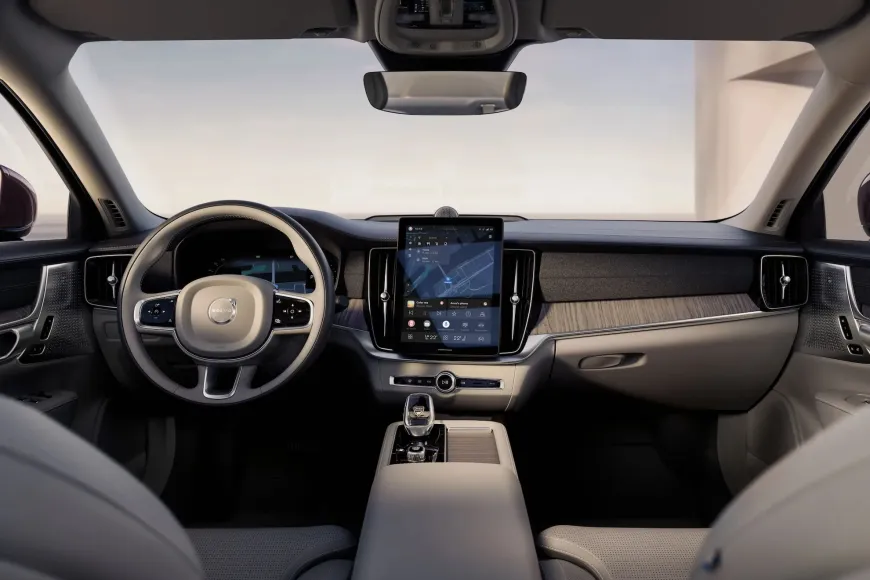
Volvo Cars has reached an agreement with the Trump administration that allows the automaker to continue importing and selling vehicles with Chinese-connected technology in the United States despite new federal restrictions targeting Chinese automotive software and hardware.
The Swedish automaker, which is majority-owned by China’s Geely Holding, confirmed Tuesday that it received special authorisation from the U.S. Department of Commerce. The approval exempts Volvo from restrictions tied to connected vehicle technologies, including software used for smartphone integration, internet connectivity, and certain driver-assistance features. Bloomberg first reported the decision.
Volvo had previously faced restrictions under rules finalised during the Biden administration in January 2025. Those rules banned vehicles equipped with software and hardware developed or maintained by Chinese companies due to national security concerns. The software restrictions were set to begin with 2027 model-year vehicles, while hardware-related bans are scheduled to take effect starting with 2030 model-year vehicles.
Although most Volvo vehicles sold in the United States are manufactured in Sweden, the company’s ownership ties to Geely and its operations in China placed it within the scope of the restrictions. The Volvo EX90 is currently assembled at the automaker’s South Carolina facility.
Volvo said the exemption followed “constructive discussions” with the Commerce Department and other U.S. officials regarding the company’s governance structure, technology systems, and data security protections. The company stated that the approval will allow it to continue expanding its manufacturing and sales operations in the United States.
In September 2025, Volvo announced plans to add production of the XC60 midsize SUV and a new hybrid vehicle at its South Carolina plant. Earlier this year, the automaker also confirmed that production of the Polestar 3 electric SUV, developed by its sister company Polestar, would shift to the U.S. facility. The Polestar 3 is also currently produced in Chengdu, China.
The federal regulation, formally titled “Securing the Information and Communications Technology and Services Supply Chain: Connected Vehicles,” focuses heavily on national security concerns surrounding connected and autonomous vehicle systems linked to Chinese companies.
Under the same rules, Chinese firms are prohibited from testing autonomous vehicles in the United States. Several companies with ties to China, including Baidu’s Apollo Autonomous Driving unit, Pony.ai, and WeRide, currently hold permits to test self-driving technology in California, with human safety operators behind the wheel.