
































Volvo Expands Nvidia Partnership to Bring Automated Driving to Future Cars
Volvo expands its partnership with Nvidia to develop automated driving for future cars using Hyperion, Alpamayo, and Halos, with the first model planned for 2030.
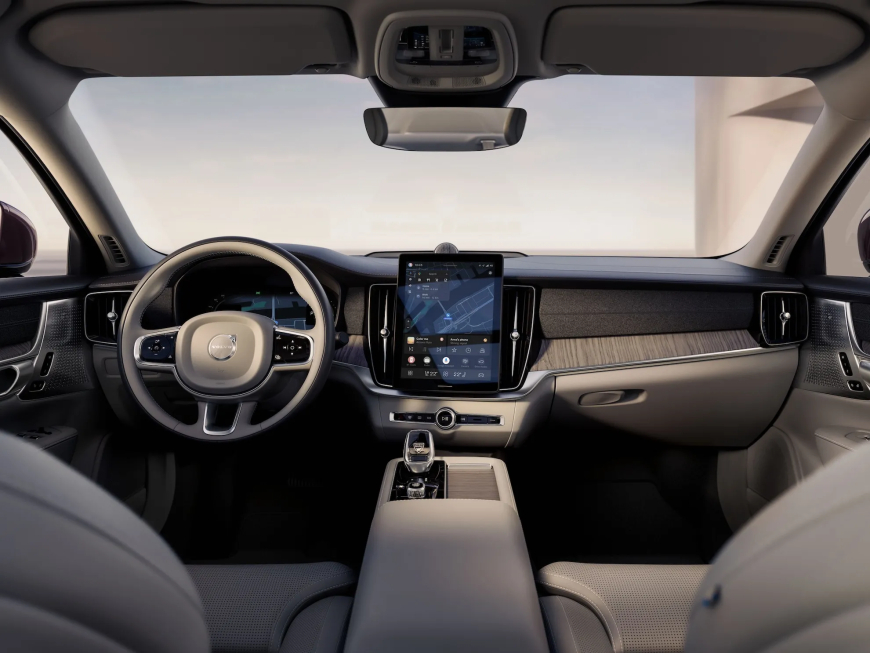
Volvo is expanding its use of Nvidia technology to develop a more advanced automated driving system that can navigate city streets and highways. The Swedish automaker plans to combine Nvidia’s latest AI technology with its own vehicle safety systems, extending the capabilities beyond electric vehicles.
Announced October 15, the agreement brings together three Nvidia technologies: Hyperion, Alpamayo and Halos. Volvo expects to introduce the integrated system in a new vehicle before 2030, although it has not disclosed the model or financial terms.
Volvo Combines Three Nvidia Technologies for Automated Driving
Nvidia Hyperion provides the sensor and computing architecture needed to process information from cameras, radar and other vehicle sensors. Alpamayo supplies AI models, datasets, and simulation tools for developing automated-driving software, while Halos provides a framework for evaluating safety.
According to Ali Kani, head ofNvidia’ss automotive division, the system combines two parallel approaches to driving decisions. One relies on Alpamayo’s AI models, while the other uses conventional software supported by machine learning and camera and radar perception.
Running both systems simultaneously is intended to improve reliability through redundancy and different methods of interpreting road conditions. Nvidia says Alpamayo’s open-source technology has attracted more than 650,000 developers.
Volvo Plans Broader Rollout Beyond Electric Vehicles
Volvo already uses Nvidia’s Orin computing platform in its battery-electric vehicles. The chips process sensor information to support vehicle awareness and driver assistance functions.
The automaker now intends to standardise more of its future vehicle architecture around Nvidia Hyperion, including sensors and computing hardware. The approach could eventually support electric vehicles, plug-in hybrids and gasoline-powered models.
Alwin Bakkenes, Volvo’s head of software development, said the company has shifted from developing technology separately for individual vehicle lines toward a unified software and hardware architecture.
That transition could make it easier to introduce automated driving capabilities across multiple models without rebuilding the underlying technology for each vehicle.
First Vehicle Expected Before 2030
Volvo plans to debut the new system in an upcoming vehicle before the end of the decade. Bakkenes said the initial model would lay the foundation for rolling out the technology across the company’s wider lineup.
However, Volvo has not confirmed which automated driving functions will be available at launch or whether they will require continuous driver supervision. Specific markets and deployment dates also remain unannounced.
The strategy reflects Volvo’s move toward a common technology platform for its vehicles. Its success will depend on how safely and reliably the combined Nvidia systems perform in real-world driving conditions.
What's Your Reaction?
 Like
0
Like
0
 Dislike
0
Dislike
0
 Love
0
Love
0
 Funny
0
Funny
0
 Angry
0
Angry
0
 Sad
0
Sad
0
 Wow
0
Wow
0