

























Why the New Sonos Play Is My Favourite Speaker for the Desk and Kitchen
Discover why the new Sonos Play has become a top choice for desk and kitchen listening. Explore its sound quality, compact design, smart features, and seamless multi-room audio experience.
Working from home means I spend most of my day listening to music, podcasts, or videos through headphones or AirPods. Still, I’ve long wanted a compact speaker that could comfortably sit on my desk without occupying too much space. That made the new Sonos Play an ideal first Sonos product for me to test.
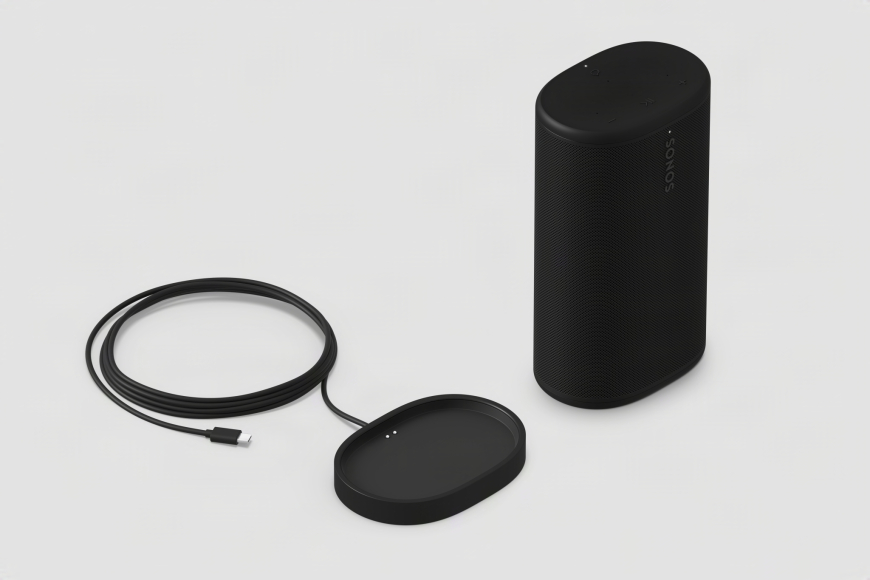
Introduced in March, the Play is Sonos’ first brand-new hardware release in more than a year. Priced at $299, the speaker blends two categories into one device: it functions as both a home speaker and a portable companion. It rests on a pill-shaped charging dock when on your desk, yet weighs only 1.3 kilograms and includes a built-in “utility loop” on the back, making it easy to carry from room to room or even outdoors.
During my time with the speaker, I frequently listened to a podcast at my desk before taking the Play into the kitchen to prepare coffee or cook. Compared with AirPods, the experience feels much more natural because you stay aware of your surroundings rather than completely blocking them out. It also means you’re less likely to miss someone speaking from another room. Playback doesn’t depend entirely on voice controls either, as both Sonos Assistant and Alexa come built into the speaker.
The physical buttons also proved useful. Adjusting the volume or skipping tracks with messy or greasy hands is far easier than tapping tiny AirPods controls. The downside is that the buttons themselves are difficult to locate at first. They match the silicone surface in colour and sit only slightly above it, making them blend in. After several days, I became familiar with where everything was, but a little more texture or stronger visual contrast would have improved usability from the start.
Build quality is another highlight. The Play carries an IP67 rating, allowing it to withstand rain and even short periods of submersion. I tested this by running it under a tap, and it continued working without any problems. Another welcome addition is its ability to serve as a power bank, allowing you to recharge your phone when necessary—a particularly practical feature if you’re spending time outdoors.
Audio performance comes from dual-angle tweeters, a mid-woofer, three digital amplifiers, and two passive radiators designed to enhance bass response when used outdoors. At moderate listening levels, the speaker delivers balanced sound with impressive detail, while individual instruments remain easy to distinguish. The overall soundstage is fairly narrow, however, so music feels more focused than spacious. Increasing the volume also results in some loss of clarity compared with lower listening levels.
The Play is clearly designed for personal listening spaces, such as a work desk, balcony, or patio, rather than for filling an entire room with sound. For larger spaces, Sonos’ Era 100 SL, introduced alongside the Play, is the stronger option. Owners can also pair two Play speakers together to create a stereo setup either through the Sonos app or by simply pressing and holding the play/pause button on both units at the same time. Stereo mode noticeably improves music playback, although it adds less value for television audio, which these speakers were never intended to replace.
Sonos has also included its updated Trueplay technology, which automatically adjusts the sound profile based on the surrounding environment using the speaker’s built-in microphones. Earlier versions required users to walk around the room waving their phone while calibration took place—an awkward process that would have been impractical for a portable speaker. The new automatic system makes the experience much more seamless.
The company’s app has received significant criticism over the past year due to issues such as disappearing speakers and unreliable volume controls. Although Sonos has addressed many of those problems, a few imperfections remain. During testing, syncing the Play with my MacBook occasionally introduced noticeable lag. Likewise, starting or pausing YouTube playback sometimes caused a brief delay before the speaker responded.
Moving audio between speakers worked consistently via AirPlay but repeatedly failed in the Sonos app until I installed the Apple Music integration. Even after doing so, switching devices still felt more complicated than necessary.
One unnecessary step is the app’s “Apply” button, which users must press to confirm speaker changes. AirPlay performs the same task instantly with a single tap, making the Sonos approach feel unnecessarily slow.
I also encountered a bug with Pocket Casts integration. Instead of resuming podcasts where I had stopped listening, episodes kept restarting from the beginning, creating an inconvenience for anyone listening to longer shows.
Overall, the Sonos Play succeeds in delivering on its promise. Despite lingering software frustrations, the speaker itself performs well, and Sonos continues to improve its software with updates. If portability is not essential, the Era 100 ($219) or Era 100 SL ($189) provide louder sound at lower prices. Those seeking a tougher speaker, built primarily for travel, may also want to consider the Sonos Roam 2 or the JBL Charge 6. However, for anyone looking for a speaker that feels equally comfortable sitting on a work desk or accompanying them onto the back porch, the Play makes a compelling argument for itself.
What's Your Reaction?
 Like
0
Like
0
 Dislike
0
Dislike
0
 Love
0
Love
0
 Funny
0
Funny
0
 Angry
0
Angry
0
 Sad
0
Sad
0
 Wow
0
Wow
0