






































Zelda: Ocarina of Time Remake Preview: Modern Controls, Darker Dungeons
Nintendo’s Ocarina of Time remake brings rebuilt visuals, modern controls, voice-acted scenes and Zelda Notes to Switch 2 ahead of its November 5 launch.
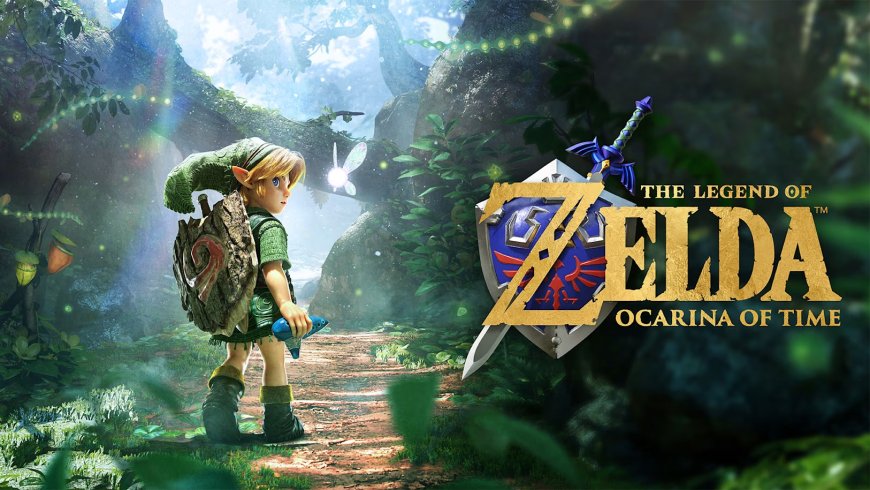
The Legend of Zelda: Ocarina of Time is returning on November 5, 2026, as a fully rebuilt Nintendo Switch 2 adventure. Nearly three decades after its Nintendo 64 debut, the remake modernises Link’s movement, combat controls, environments and presentation while retaining the original game’s defining journey through Hyrule.
Early gameplay previews suggest that Nintendo has concentrated on making the classic adventure more approachable rather than replacing its underlying design. A freely controlled camera, dedicated jumping and sprinting commands, streamlined item selection, and substantially improved visuals address several limitations of the 1998 release. The darker atmosphere of familiar dungeons may matter just as much, giving locations such as the Forest Temple a more unsettling presence.
Modern Controls Make Ocarina of Time More Approachable
Ocarina of Time helped establish the foundations of modern 3D adventure games, but its original control scheme has aged considerably. Camera movement was restricted, jumping happened automatically and switching equipment frequently interrupted gameplay. Those limitations are particularly noticeable to players familiar with Breath of the Wild and Tears of the Kingdom.
The Switch 2 remake adds manual jumping, sprinting, and camera movement with the right analogue stick. Players can also access weapons and equipment through a quicker selection interface instead of repeatedly navigating traditional inventory menus.
These adjustments should make exploration and combat feel more responsive without requiring Nintendo to redesign the game’s encounters. Lock-on targeting remains central to combat, preserving an important part of the original experience while allowing Link to move and react more naturally.
Nintendo’s 40th anniversary announcement also confirms faster loading, smoother performance and expanded camera freedom. Together, these improvements could remove many of the frustrations that make the Nintendo 64 version difficult to revisit today.
A More Detailed Hyrule With Darker Dungeons
The visual overhaul is more substantial than a straightforward resolution upgrade. Nintendo has rebuilt environments, character models, textures and lighting to give Hyrule a more detailed appearance. The new presentation retains the original’s fantasy atmosphere while using modern hardware to make its locations more expressive.
The Forest Temple is an especially interesting example. Early previews describe stronger contrasts between light and darkness, with stained-glass windows casting deep red illumination across interior spaces. The result is a more intimidating environment that emphasises the horror elements already present in the original dungeon.
That approach makes sense for Ocarina of Time, which often contrasted the innocence of Young Link’s journey with the damaged world Adult Link encounters. More detailed environments can strengthen that transition without changing the story unnecessarily.
Nintendo has also added fully voiced cutscenes, expanded character dialogue and symphonic orchestral music. These upgrades could make Hyrule feel more populated and emotionally engaging, although their success will depend on how naturally the new performances fit the established characters.
Threads of Time and Zelda Notes Offer Additional Guidance
One of the most useful additions is Threads of Time, a progression feature that allows players to review their journey and identify their next objective. The system is particularly relevant to a game built around interconnected quests, exploration and revisiting earlier locations with new equipment.
The remake also supports Zelda Notes through the Nintendo Switch mobile app. Players can track accomplishments, take part in location-based challenges, and use a virtual ocarina on compatible smartphones.
Nintendo’s official game listing confirms the additional smartphone features, along with amiibo compatibility. The integration is optional, but it offers another way for newcomers to track progress in a game that originally provided relatively limited assistance.
Importantly, these systems don’t seem intended to replace puzzle-solving or exploration. Their purpose is to reduce uncertainty about the next destination, allowing players to spend more time engaging with the adventure itself.
What Makes This Remake Different?
Nintendo’s central challenge is balancing accessibility with the original game’s carefully structured progression. Unlike the open-ended worlds of recent Zelda releases, Ocarina of Time follows a more directed adventure built around specific dungeons, tools and story events.
That structure remains one of its greatest strengths. New equipment gradually changes how Link interacts with familiar environments, while the transition between childhood and adulthood transforms the meaning of previously visited locations. Modern controls should make those ideas easier to appreciate rather than fundamentally changing how the game works.
However, the remake’s smaller scale may surprise players introduced to the series through its recent open-world entries. Exploration offers fewer possibilities, combat systems are less elaborate, and progression is more tightly controlled. Those differences reflect the original game’s design rather than shortcomings that automatically require correction.
Release Date and What Remains Uncertain
The Legend of Zelda: Ocarina of Time launches exclusively for Nintendo Switch 2 on November 5, 2026. Nintendo has listed a $59.99 US price, positioning the remake as a standalone release rather than a simple upgrade to the Nintendo 64 version available through Nintendo Switch Online.
The company’s October 14 overview trailer announcement provides another look at the rebuilt adventure ahead of launch. Nevertheless, preview demos can’t show how consistently the finished game performs across every dungeon, battle, and outdoor environment.
Questions also remain about how the expanded dialogue affects pacing and whether improvements to movement and combat remain consistent throughout the complete adventure. These details require evaluation of the final release rather than conclusions drawn from limited previews.
Preview Verdict
Ocarina of Time appears to be getting a remake that respects its original design while addressing mechanical limitations that have become hard to ignore. Modern camera controls, faster equipment management and a more atmospheric Hyrule are meaningful changes that could improve the experience for returning players and newcomers alike.
The most encouraging aspect is Nintendo’s apparent restraint. The remake doesn’t need to turn Ocarina of Time into another Breath of the Wild. It’s a more focused adventure, with carefully designed dungeons and distinctive progression that already make it a compelling alternative to modern open-world Zelda games.
Early impressions are promising, especially regarding controls and environmental presentation. Whether this becomes the definitive version of Ocarina of Time will depend on the complete game’s performance, pacing and consistency when it arrives on November 5.
What's Your Reaction?
 Like
0
Like
0
 Dislike
0
Dislike
0
 Love
0
Love
0
 Funny
0
Funny
0
 Angry
0
Angry
0
 Sad
0
Sad
0
 Wow
0
Wow
0