






























Federal Judge Rules Warrantless Flock Search Violated Fourth Amendment
A federal judge ruled a warrantless Flock license plate search violated the Fourth Amendment, suppressing evidence gathered after the database query.
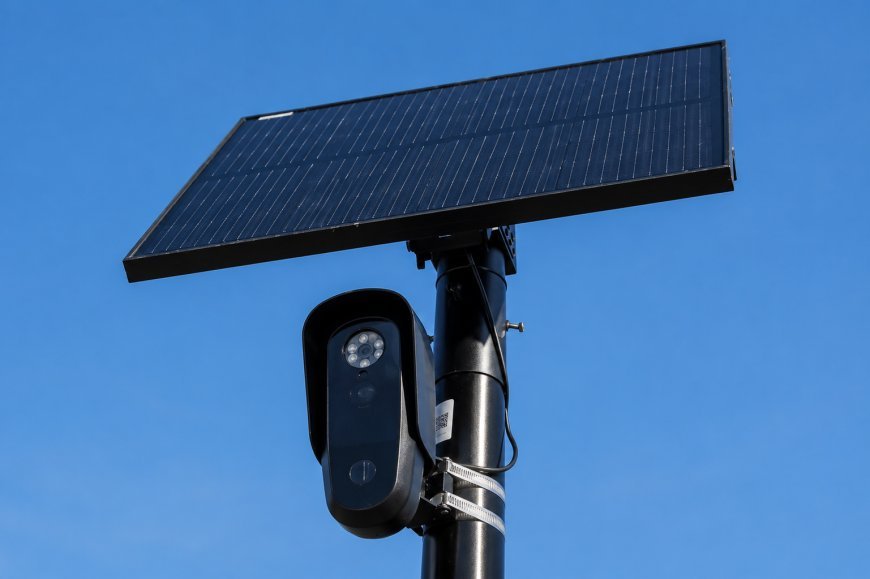
A federal judge ruled that a Tulsa County sheriff’s deputy violated a woman’s Fourth Amendment rights by searching Flock Safety’s license plate database without a warrant, in one of the clearest judicial rebukes yet of how law enforcement uses automated license plate reader data.
404 Media first reported the ruling by U.S. District Judge Sara Hill. In the case, Hill said the deputy had no apparent reason to search the woman’s license plate other than the fact that the vehicle had a California plate.
Judge says the warrantless Flock search tainted later evidence
According to the ruling, the deputy later relied on the woman’s travel history from Flock as part of the justification for searching her vehicle, where officers allegedly found 91 pounds of methamphetamine. Hill wrote that the evidence obtained after the Flock search had to be suppressed as the fruit of a poisonous tree because the initial database search violated the Constitution.
Hill also used the case to make a broader point about location tracking. She wrote that following a person’s movements in public becomes constitutionally problematic when law enforcement can passively collect and search a long record of where someone has been, then access that information whenever convenient.
Hill compares Flock-style tracking to mass surveillance
The opinion described Flock’s networked camera system as “a type of indiscriminate mass surveillance,” because it collects information on all vehicles passing connected cameras rather than targeting a single person from the outset. Hill contrasted that with the narrower legal issues at the centre of Carpenter v. United States, the Supreme Court case that limited how the government can obtain certain forms of historical cell phone location data without a warrant.
The ruling does not create binding precedent, but it adds to a growing legal and political debate over automated license plate readers and how much location data they make available to police. Flock Safety has faced criticism from privacy advocates, and some local and state governments have moved to stop using the technology.
The decision also arrives as pressure on Flock grows in Washington. Sen. Bernie Sanders introduced legislation on Friday that would bar federal agencies from using automated license plate readers such as Flock, adding new momentum to a broader argument that large-scale vehicle tracking should face stricter constitutional and legal limits.
What's Your Reaction?
 Like
0
Like
0
 Dislike
0
Dislike
0
 Love
0
Love
0
 Funny
0
Funny
0
 Angry
0
Angry
0
 Sad
0
Sad
0
 Wow
0
Wow
0