






































Flight Attendants Alarmed as Google Moves to Buy Huge Trove of Spirit Employee Data
Flight attendants are challenging Google’s $10 million bid for Spirit Airlines’ data, raising privacy concerns about employee emails, chats, and workplace records.
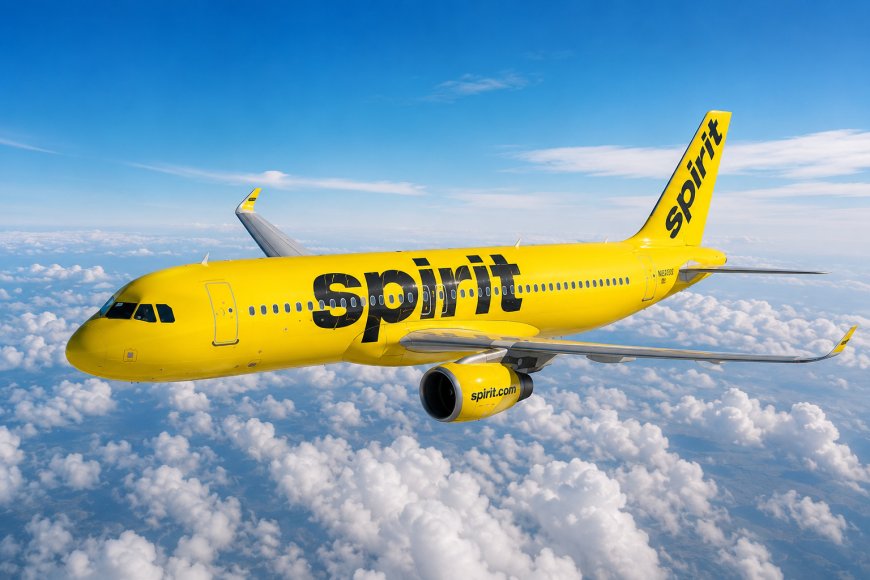
Google’s plan to buy a massive collection of internal Spirit Airlines data for $10 million has run into a privacy challenge from the union representing the carrier’s flight attendants.
Google won a bankruptcy auction for Spirit’s business data, software code and operational records, with plans to use the material to improve its products and artificial intelligence models. The proposed transaction still needs approval from the U.S. Bankruptcy Court for the Southern District of New York.
A hearing that had been scheduled for Aug. 19 was postponed to Sept. 9 after the Association of Flight Attendants-CWA filed an objection, raising concerns about the inclusion of decades of employee information in the sale.
The dispute highlights a question that is becoming increasingly important as AI companies look beyond publicly available internet content for training material: what happens to years of workplace emails, chats and employee records when a company fails and its data becomes a valuable asset?
Google’s Bid Includes Hundreds of Millions of Workplace Messages
The scale of the Spirit dataset is unusual.
According to records filed in Spirit’s bankruptcy proceedings, the proposed sale includes approximately:
- 100 million emails
- 500 million Microsoft Teams chats and collaboration records
- More than 175,000 employee records dating back to 1986
- About 30 million lines of software code
- Calendars, spreadsheets and documents
- Human resources and project management information
- Revenue and aircraft operations data
- Employee productivity information
- Audit and fraud-related records
- Software models, algorithms and development metadata
Google beat a $7.5 million offer from AI recruiting company Mercor to become the winning bidder with its $10 million offer. Mercor was designated the backup buyer if Google’s transaction does not close.
Google has said the enterprise dataset could help improve its products and AI models.
The sale does not mean Google would receive Spirit’s customer database without restrictions. Court records say Spirit’s roughly 97.5 million passenger profiles and approximately 50.2 million Free Spirit loyalty program records are excluded from the transaction.
Flight Attendants Say Removing Names May Not Be Enough
Google says a third party will scrub personally identifiable information from the dataset before the company receives it.
That protection is at the centre of the disagreement.
The Association of Flight Attendants-CWA argues that removing names and other obvious identifiers does not necessarily address the confidentiality of workplace information.
The union has pointed to records involving disciplinary matters, payroll, timekeeping, training deficiencies, workplace communications and medical or accommodation requests as examples of information that could remain sensitive even after direct identifiers are removed.
There is also concern about whether individuals could be effectively identified through context.
A conversation may no longer contain an employee’s name, for example. Still, information about a particular crew base, schedule, incident or job role could potentially narrow the number of people involved.
That distinction separates deidentification from confidentiality. A record can have obvious identifying information removed while still containing details that employees never expected to become part of an AI development dataset.
Union Wants Flight Attendant Records Removed or Better Protected
The union is not simply asking the bankruptcy court to reject the entire transaction.
Its objection seeks additional protections if the sale proceeds.
AFA has sought the exclusion of flight attendant information, such as training records, payroll data, and timecards, as well as Microsoft 365 content containing such information.
Alternatively, the union wants stronger procedures for reviewing labour and disciplinary records, as well as internal communications,ons before information is transferred.
It has also raised concerns about whether datasets could later be transferred to third parties and whether Google could use the information to profile an identifiable group of Spirit flight attendants.
Those issues now give the bankruptcy court more to consider than the financial value of Google’s bid.
Why Google Wants Real Corporate Data
For AI developers, Spirit’s archive represents something that cannot easily be recreated by scraping public webpages.
Years of internal emails, chats, software development records and operational documents show how a real company worked day to day.
That type of information can contain examples of employees discussing problems, coordinating projects, making decisions, handling customers, managing operations and responding to unexpected events.
Such material could potentially be useful for improving AI systems designed to understand complex workplace tasks.
It also explains why corporate data is becoming an asset of financial value even after the company that generated it ceases operations.
Spirit ceased operations on May 2 during its second Chapter 11 bankruptcy process in two years. The airline had approximately $8.1 billion in debt, and roughly 17,000 workers were laid off when operations ended.
The bankruptcy process has since involved selling remaining assets to recover money for creditors.
Employee Data Is Becoming Part of the AI Data Economy
The Spirit dispute raises broader questions that extend beyond one airline.
Employees generate enormous quantities of information inside corporate systems. Email, Slack and Teams conversations, performance records, internal documents, calendars and project-management systems can collectively create a detailed record of how an organisation operates.
Historically, companies retained much of this information for legal, regulatory, operational or security reasons.
The growth of generative AI has created another possible use.
Corporate records can provide AI developers with real-world examples that are difficult to find in public training datasets. A bankrupt company’s digital archive can therefore have value in much the same way as its software, intellectual property or other business assets.
The Spirit case is testing how employee privacy should fit into that process.
Consumer information has received explicit protection in the proposed sale, while the flight attendants’ union argues that workers deserve stronger safeguards as well.
The Deal Is Not Final
Google may have won the bankruptcy auction, but it does not yet own the Spirit dataset.
Bankruptcy Judge Sean Lane postponed the sale hearing until Sept. 9, giving the court additional time to consider the union’s objections.
The court could approve the transaction as proposed, require additional privacy protections or consider other changes before allowing the data transfer to proceed.
There is another potential complication. Business Insider reported on Aug. 20 that AI startup Micro1 is preparing a $12.5 million offer for the Spirit data, exceeding Google’s winning $10 million bid. The reported offer arrived after the original auction deadline, and it is not yet clear whether the bankruptcy court will consider it.
For former Spirit employees, the larger issue remains what happens to workplace information created years before selling corporate data for AI training was a realistic possibility.
The answer could matter well beyond Spirit Airlines as more companies, creditors and AI developers recognise that decades of internal business records may have substantial value of their own.
What's Your Reaction?
 Like
0
Like
0
 Dislike
0
Dislike
0
 Love
0
Love
0
 Funny
0
Funny
0
 Angry
0
Angry
0
 Sad
0
Sad
0
 Wow
0
Wow
0