




































5 PearX Startups Drawing Investor Attention in AI, Chips and Robotics
Five PearX startups are drawing investor attention across spatial AI, edge chips, personal assistants, estate planning and industrial design.
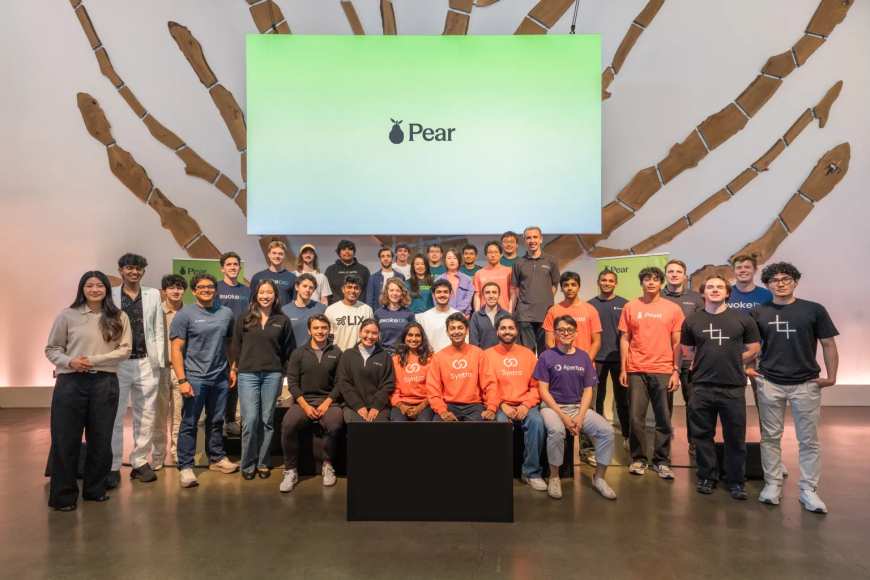
Pear VC’s latest PearX demo day put a fresh group of early-stage companies in front of investors, with startups spanning spatial AI, semiconductors, personal assistants, estate planning and industrial design.
PearX is a 12-week accelerator that keeps cohorts relatively small and can invest up to $2 million in participating companies. Previous batches have produced startups that went on to raise larger institutional rounds, including Andera, which automates corporate audit and compliance work and later secured a $37 million Series A led by Lightspeed.
Among the companies presented at the latest demo day, five stood out for addressing technically difficult markets where AI is moving beyond conventional software.
Speridlabs: Editable spatial AI models
Speridlabs is developing foundation models for 3D environments that could be used in robotics, gaming and visual effects. Its main product, Mundus, is designed to generate persistent 3D worlds whose geometry remains consistent when users change individual elements.
The company is positioning that editability as a distinction from other world-model systems. Rather than generating a scene that must largely be recreated when altered, Speridlabs wants developers to query and modify specific parts while preserving the rest of the environment.
Saia: Running AI inference directly from flash storage
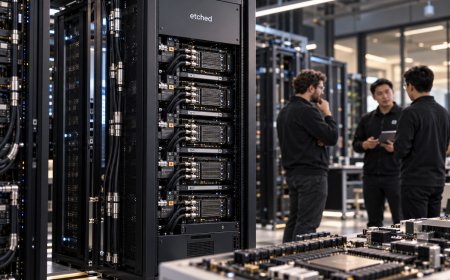
Saia is developing an AI inference chip designed to reduce dependence on expensive, power-intensive memory. Its approach runs models directly from flash storage, which the company says could increase capacity while lowering power requirements for on-device AI.
Saia says it is already discussing memory integration with Samsung, plans to fabricate test chips next year and is targeting mass production by 2028. The company is entering a difficult hardware market dominated by established semiconductor companies, but its pitch centres on making local AI inference more efficient as demand for edge computing grows.
Ren: A privacy-focused AI personal assistant
Ren is building an AI personal assistant around security and privacy. The startup says it keeps information on-device where possible and otherwise uses a private cloud, while allowing users to set guardrails governing what actions the assistant can take.
Ren also uses an automated voice system for phone calls rather than relying on human operators. That approach is intended to keep third parties out of potentially sensitive interactions while still allowing the assistant to act on a user’s behalf.
Veros: AI for trusts and estate planning
Veros is applying AI to trust and estate planning, an area traditionally handled through attorneys, wealth managers and trust administrators. Its platform recommends trust structures and help manage assets over their lifetime.
The startup says it already manages about $250 million in assets and is pursuing a trust charter that would allow it to operate as a regulated trust company. That would move Veros beyond simply providing planning software and into the regulated administration of trusts.
Datum: AI search for industrial 3D designs
Datum is building an AI engineering system for companies that design physical products. Its software indexes existing 3D design libraries so engineers can find and reuse components already created rather than starting from scratch.
The company uses what it calls Geometric Fingerprint technology to identify parts by shape. That could make large archives of CAD and other engineering designs easier to search and potentially automate parts of the product-development process.
Together, the five startups reflect the breadth of the current early-stage AI market. Rather than focusing only on chatbots or general-purpose models, they are applying AI to spatial computing, specialised chips, personal automation, regulated financial services and industrial engineering, areas where technical execution and real-world deployment may matter as much as the underlying model.
What's Your Reaction?
 Like
0
Like
0
 Dislike
0
Dislike
0
 Love
0
Love
0
 Funny
0
Funny
0
 Angry
0
Angry
0
 Sad
0
Sad
0
 Wow
0
Wow
0