


























FunnyPlaying FPGB Mini: A $69 FPGA Handheld Built for Game Boy Cartridges
FunnyPlaying’s FPGB Mini is a compact $69 FPGA handheld with original Game Boy cartridge support, a 2.98-inch display, USB-C and a rechargeable battery.
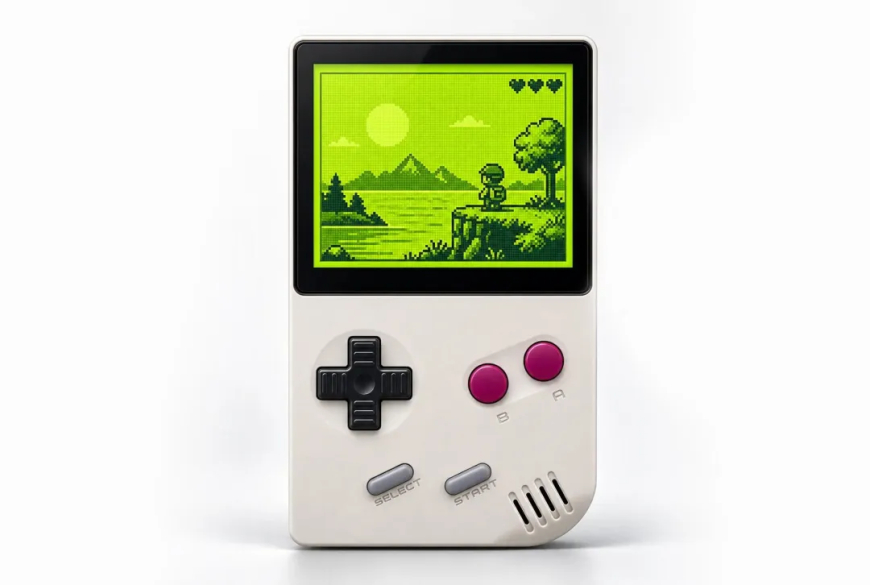
The FunnyPlaying FPGB Mini takes a simple approach to retro handheld gaming: make original Game Boy and Game Boy Colour cartridges playable on a device small enough to fit comfortably in a pocket, while replacing decades-old display and power technology with modern hardware. Its lower-cost positioning also separates it from premium FPGA handhelds such as the Analogue Pocket and ModRetro Chromatic.
The FPGB Mini uses an FPGA rather than relying exclusively on conventional software emulation for cartridge playback. That gives FunnyPlaying a way to recreate original Game Boy hardware behaviour while retaining support for physical cartridges. The concept is appealing, but the lower price also brings compromises in connectivity, cartridge compatibility and overall feature depth.
A Much Smaller Take on the Game Boy
The FPGB Mini measures 113 × 64 × 22mm and weighs about 135g with its battery installed. FunnyPlaying describes the proportions as close to a miniaturised Game Boy Colour, though the visual design also borrows from the vertical layout of Nintendo’s original Game Boy.
The front keeps the controls deliberately simple: a directional pad, A and B buttons, and Start and Select. A sliding power switch sits at the top, while physical volume controls are positioned on the side. There are no analogue sticks or additional controls intended for newer gaming platforms because the hardware focuses specifically on the Game Boy generation.
FunnyPlaying includes a protective hard case with the console. The company’s official FPGB Mini product page lists the handheld at $69, although availability can fluctuate and production batches may sell out.
The 2.98-Inch Display Is a Major Upgrade
The FPGB Mini uses a 2.98-inch IPS display with an 800 × 720 resolution and support for 16.7 million colours. That is dramatically sharper than the screens fitted to original Game Boy hardware and gives the compact handheld enough resolution to reproduce classic pixel graphics cleanly.
The relatively small panel also helps preserve the device’s pocketable dimensions. Rather than turning the FPGB Mini into a large premium handheld, FunnyPlaying has kept the screen proportional to the rest of the chassis.
You can adjust brightness through several levels in the system interface. The console also offers selectable Game Boy and Game Boy Colour operating modes, allowing original monochrome titles to run through the hardware’s available display options.
There is no claim here that the FPGB Mini’s display exactly reproduces every characteristic of an original Nintendo LCD. The key difference is practical: buyers get a modern IPS panel with significantly higher resolution, better visibility, and better colour than the displays in Nintendo’s original handhelds.
FPGA Hardware Is the Core of the FPGB Mini
The main technical distinction is the FPGA architecture. A field-programmable gate array can be configured to reproduce the logical behaviour of older hardware at a circuit level rather than translating every operation through a conventional software emulator.
FunnyPlaying markets this approach as a way to deliver more faithful timing and cartridge behaviour. The idea is similar to the technology used by higher-priced devices such as the Analogue Pocket. However,h the two products differ considerably in display specifications, system support and additional features.
The FPGB Mini is intentionally narrower in scope. Its cartridge slot supports original 32-pin Game Boy and Game Boy Colour cartridges rather than the wider selection of handheld systems the Analogue Pocket supports through cartridges and optional adapters.
That narrower focus is a reasonable compromise for a budget-oriented device. Buyers focused mainly on an existing collection of Game Boy and Game Boy Colour games may not need the extra system support offered by more expensive FPGA hardware.
Cartridge Support Has Some Important Limits
Original standard-size Game Boy and Game Boy Colour cartridges are the FPGB Mini’s primary use case. FunnyPlaying describes them as plug-and-play, letting you insert a cartridge and launch it without the configuration normally associated with software emulation.
Prospective buyers should note a few exceptions. FunnyPlaying’s official FPGB Mini manual states that compatibility with flash cartridges, clone cartridges and other non-original carts is not guaranteed.
The cartridge slot’s physical depth also creates limitations. The Game Boy Camera and some unusually shaped or elongated cartridges do not fit correctly and are officially listed as unsupported.
That makes the FPGB Mini better suited to a conventional collection of standard original cartridges than to users relying heavily on unusual accessories or third-party flash carts.
Real-Time Clock Support Matters for Certain Games
FunnyPlaying has included a dedicated real-time clock backed by a CR2032 battery. That feature matters for games that use calendar or time-of-day mechanics, including Game Boy Colour-era titles that continue progressing based on real-world time.
It is a relatively specialised feature, but it makes sense on hardware aimed at physical cartridge collectors. A retro handheld can reproduce graphics and controls accurately but still lose part of the original experience if it doesn’t handle time-dependent game mechanics properly.
The RTC battery is separate from the console’s main rechargeable battery, with FunnyPlaying estimating more than two years of standby operation for the clock system.
Battery and Charging
Power comes from a removable 1,800mAh lithium battery. FunnyPlaying rates playtime at approximately four to six hours per charge, depending on usage. Because this figure comes from the manufacturer rather than independent testing conducted by TechAmerica.ai, actual runtime may vary with brightness, cartridge behaviour, and other settings.
Charging is handled over USB-C at 5V/1A, with FunnyPlaying estimating roughly two to three hours for a full charge. The company says the device works with common USB charging protocols, including compatible USB Power Delivery chargers.
The removable battery is a useful design decision for a retro-focused product. Rechargeable cells naturally lose capacity with age, and a replaceable battery gives the handheld a better chance of staying usable long after its original cell begins to deteriorate.
MicroSD and Link Play Add Modern Flexibility
A microSD slot supports cards up to 32GB formatted as FAT32. FunnyPlaying positions the storage for functions including save backups, screenshots and firmware-related expansion.
The USB-C port also serves a second purpose beyond charging. An additional adapter and cable setup support link functionality, allowing compatible games to use multiplayer or trading features. The required link hardware is not included with the handheld and must be purchased separately.
There is no 3.5mm headphone jack. Audio comes through a built-in 0.5W speaker instead, which is one of the clearer hardware compromises compared with more fully featured premium handhelds.
FPGB Mini vs Analogue Pocket and ModRetro Chromatic
Price is one of the FPGB Mini’s clearest competitive advantages. The Analogue Pocket is listed at $239.99 and supports Game Boy, Game Boy Colour and Game Boy Advance cartridges out of the box, alongside optional adapters for additional systems. It also has a larger 3.5-inch 1600 × 1440 display, stereo speakers and more extensive connectivity.
The ModRetro Chromatic occupies another part of the premium retro market. It is designed specifically around original Game Boy and Game Boy Colour cartridges but offers a different level of materials, display technology and overall refinement.
The FPGB Mini doesn’t try to match either product feature for feature. It sacrifices some refinement and broader functionality for a more accessible entry point and a genuinely compact design.
That difference makes direct rankings less useful. Someone seeking a premium all-purpose FPGA handheld may find the Analogue Pocket more appropriate. In contrast, a collector primarily interested in a simple portable device for standard Game Boy cartridges may find the FPGB Mini easier to justify.
Pros and Cons
Pros:
- Affordable entry point compared with premium FPGA handhelds.
- Supports original standard-size Game Boy and Game Boy Color cartridges.
- Compact 113 × 64 × 22mm chassis is genuinely pocketable.
- 2.98-inch 800 × 720 IPS display offers a major visual upgrade over original hardware.
- Dedicated real-time clock supports time-dependent game functions.
- Removable rechargeable battery improves long-term serviceability.
- USB-C charging and microSD expansion modernise the hardware.
- Protective hard case is included.
Cons:
- Flash carts and other unofficial cartridges are not guaranteed to work.
- Game Boy Camera and some unusually shaped cartridges are physically unsupported.
- No 3.5mm headphone jack.
- Link play requires additional hardware sold separately.
- More limited system support and features than premium FPGA handhelds.
- Availability may be inconsistent between production batches.
Final Verdict
The FunnyPlaying FPGB Mini succeeds by keeping its ambition focused. It is not designed to replace every retro handheld, nor does it attempt to offer the expansive platform support and premium hardware found in considerably more expensive FPGA systems. Its purpose is to provide a compact, modern way to use original Game Boy and Game Boy Color cartridges.
The combination of FPGA hardware, a sharp IPS display, real-time clock support, USB-C charging and a removable battery gives the FPGB Mini a strong feature set for its class. The cartridge compatibility limitations and lack of a headphone jack are worth considering, and buyers using flash carts or unusual Game Boy accessories should check compatibility carefully before purchasing.
For collectors who already own standard Game Boy cartridges and want a smaller, more convenient alternative to original hardware, the FPGB Mini occupies an interesting position. Premium alternatives offer more capability, but FunnyPlaying’s emphasis on simplicity and accessibility gives this handheld a distinct place in the FPGA retro market.
What's Your Reaction?
 Like
0
Like
0
 Dislike
0
Dislike
0
 Love
0
Love
0
 Funny
0
Funny
0
 Angry
0
Angry
0
 Sad
0
Sad
0
 Wow
0
Wow
0