






























Google Playground Lets Anyone Build AI Games From Simple Text Prompts
Google Playground lets users create and share playable games with AI prompts, while an upcoming Unity Spark integration will add advanced creation tools.
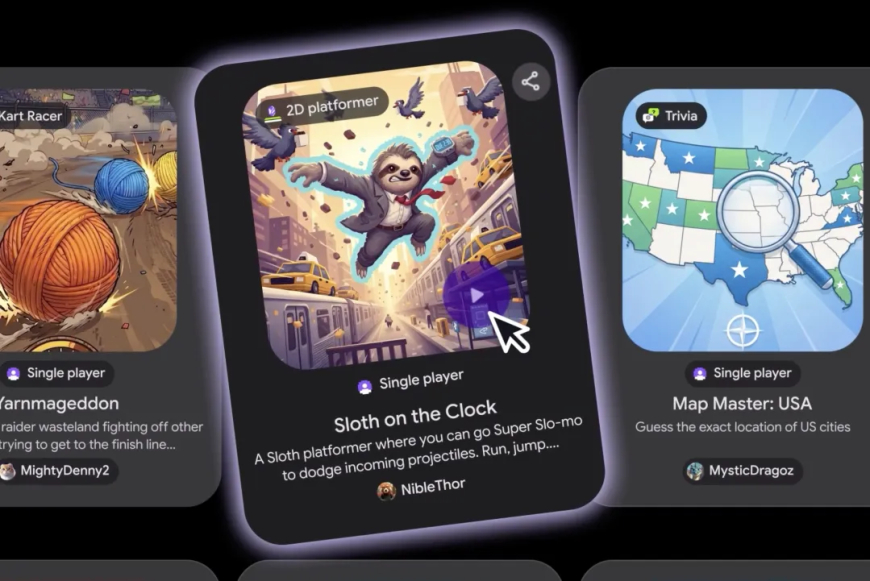
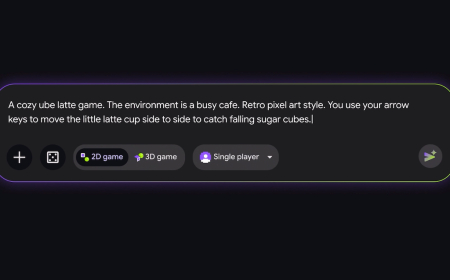
Google is testing a much simpler route into game creation. Its new Playground platform lets people describe a game in ordinary language, immediately play the result in a browser, and keep refining it without writing code. The company is also working with Unity on a more ambitious creation layer called Unity Spark, which is intended to take projects beyond lightweight experiments and toward more sophisticated 3D games.
The combination is more interesting than another AI tool that produces a playable demo from a single prompt. Google is trying to build a path that starts with casual experimentation and can gradually become more involved. Playground handles the approachable end of that spectrum today. At the same time, Unity Spark is being positioned as the next step for people who want greater control over mechanics, visuals and the structure of their games.
Google Playground turns a description into a playable game
Google describes Playground as an experimental gaming platform where users can create, play and share games using natural-language prompts. A creator can begin with a blank project, remix an existing starter idea or use guided assistance to develop a concept.
The key difference from a traditional game-development environment is that users don’t need to start by learning a programming language, game engine interface, or scripting system. They can describe the game they want, test what Playground creates, and then continue giving instructions to change the result.
Google says those changes can extend to physics, game rules, characters and environments. That makes the conversational interface more useful than a one-time generator. A first prompt can establish the basic idea, while subsequent instructions act more like an ongoing editing process.
Creation is only half of Playground
Google is also treating Playground as a place to play other people’s creations. Games can remain private, be shared through a link or be published to the wider Playground Explore gallery.
The platform supports community features through Google Play Games profiles. Users can create handles, follow creators and interact with published games, while leaderboards and multiplayer functionality are available for supported game types.
That social layer could be important. AI game-generation tools are relatively easy to demonstrate, but generating something is not the same as building a community around it. Google is trying to connect creation, discovery and play inside the same service rather than leaving people with isolated prototypes that have nowhere obvious to go once they are finished.
Google says public submissions also go through safety screening aligned with its community guidelines, and players can report content. The Explore gallery uses signals including ratings and play activity to surface creations.
Playground is deliberately aimed at people who do not code
The clearest audience is someone with game ideas who has never learned conventional development. Game creation usually requires some combination of programming, art, animation, sound, level design and engine knowledge before a concept becomes playable.
Playground compresses much of that initial work into a conversation. That does not mean it removes game design itself. A user still needs to decide what should be fun, how rules should work and which ideas are worth keeping, but the technical threshold for seeing an idea operate on screen is much lower.
This could also make Playground useful for rapid experimentation. Even people who eventually intend to use more advanced development tools may find value in quickly testing a mechanic or concept before committing significantly more time to it.
Unity Spark is where Google’s strategy becomes more ambitious
Playground is only the first part of the plan. Google and Unity have announced a broader partnership that will eventually connect Playground with Unity Spark, a new browser-based creation product intended to provide more advanced game-building capabilities without requiring previous Unity experience.
Unity says Spark will combine prompt-based creation with an actual editing environment rather than treating AI generation as the end of the process. The company is emphasising the ability to keep modifying and polishing a project after the initial concept is generated.
That distinction matters. Generative tools can produce impressive first results quickly, but real games typically require repeated adjustment. Controls need tuning, levels need pacing, mechanics need balancing, and visual assets need to work together coherently. Giving creators a way to move from an AI-generated starting point into deeper editing could make the system substantially more useful.
Unity is not presenting Spark as a one-prompt game machine
Unity’s explanation of why it built Spark makes clear that the company does not see the product as a system for producing finished games from a single command. Instead, Unity is emphasising iteration, creative control and the ability to build something that can be refined over time.
Spark will also connect with the Unity Asset Store, giving creators access to artist-made assets rather than relying entirely on generated visual material. That could help projects look more deliberate and reduce a common weakness of AI-generated creative work: inconsistent or disposable-looking assets.
Unity is targeting several kinds of creators, including experienced gamers with their own design ideas, artists who don’t know how to code, and modders who want to move from modifying existing games to creating original projects. Professional developers may also use the tool for early concepts or experimentation, though Spark is clearly being marketed first as a way to broaden access to game creation.
Playground and Spark are not the same product.
It is important to separate what is available now from what Google and Unity are promising for later. Playground is the currently accessible experimental platform. Unity Spark remains in testing and has not yet received a general public release.
Google says future Playground integration with Spark will add more advanced mechanics, high-fidelity 3D capabilities and the flexibility of the Unity runtime. The companies describe the idea as a progression: someone might begin with a simple Playground prompt and later move the concept into a more powerful creation environment.
That could give Google a more credible long-term proposition than an AI game generator alone. A beginner-friendly entry point helps, but more ambitious creators eventually need greater control. Unity’s involvement gives Google a potential route to keep those users in the same broader ecosystem as their projects become more complex.
The browser-first approach lowers another barrier
Playground runs in the browser rather than requiring users to install a traditional development environment. Google says games can be played from phones and laptops, helping make both creation and consumption more accessible.
Unity Spark is also being developed around browser-based creation. For users accustomed to downloading large game engines, configuring projects and learning complex desktop interfaces, that represents a very different starting point.
Browser-based development will inevitably raise questions about how much control and performance these tools can offer compared with full desktop engines. For beginners, however, removing installation and setup requirements makes experimentation significantly easier.
There are still meaningful limitations.
Playground is an early experiment, not a replacement for a mature game engine. The complexity, scale and performance of games it can produce should not be assumed to match professionally developed Unity, Unreal Engine or custom-engine projects.
Availability is also limited. At launch, Google says Playground is available in the United States to users aged 18 and older, with different levels of creation access rolling out according to Google One membership.
Unity Spark is even earlier. It is currently in testing, with a closed beta planned, which means many of its promised capabilities still need to be evaluated in real creator workflows. Until wider access arrives, it is too early to judge how effectively Spark bridges the gap between natural-language creation and serious game development.
What looks promising
Pros:
- Games can be created and modified using ordinary text prompts without coding experience.
- Playground supports sharing, public discovery, leaderboards and multiplayer in selected game types.
- Browser-based access substantially lowers the setup barrier for beginners.
- Unity Spark provides a potential progression path for creators who outgrow basic prompt-based tools.
- Unity plans to combine AI creation with deeper editing and access to artist-created Asset Store content.
Cons:
- Playground remains an experimental platform with limited launch availability.
- Creation access varies depending on Google One membership.
- Unity Spark is not yet generally available, and many of its advanced capabilities remain untested publicly.
- Prompt-based creation does not remove the need for good game design, iteration and creative judgment.
- Complex professional projects will still require substantially more control than a beginner-focused generator can provide.
Final Verdict
Google Playground is most compelling because it focuses on the first few minutes of making a game, the point where traditional tools often feel most intimidating. Being able to describe an idea, play it immediately and then revise the rules or environment through conversation makes experimentation far more approachable for people who have never written code.
On its own, that would make Playground an interesting AI experiment. The Unity partnership gives it a more substantial direction. Google are trying to build a ladder of creation and a deeper environment,vironmenttt rather than pretending one prompt can replace the work involved in building a polished game.
The biggest questions now sit with Unity Spark. If Spark can preserve Playground’s accessibility while giving creators enough control to keep improving their projects, the partnership could become a meaningful new entry point into game development. For now, Playground is best viewed as an accessible place to experiment, create and share, while Spark represents the more ambitious promise of where Google’s AI-assisted gaming platform could go next.
What's Your Reaction?
 Like
0
Like
0
 Dislike
0
Dislike
0
 Love
0
Love
0
 Funny
0
Funny
0
 Angry
0
Angry
0
 Sad
0
Sad
0
 Wow
0
Wow
0