





























Sony’s Mystery PlayStation Devices Fuel PlayStation Portal OLED Speculation
Two newly certified Sony PlayStation devices have fueled speculation about a PlayStation Portal OLED refresh, though Sony has not confirmed the hardware.
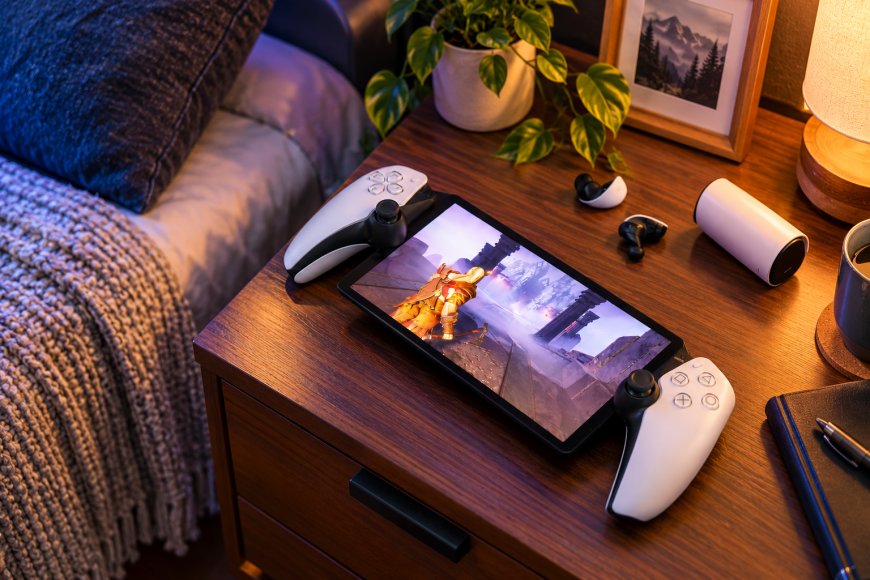
Sony may be preparing the first meaningful hardware revision of the PlayStation Portal, but the most exciting part of the rumour is exactly that: a rumour. Two unannounced Sony Interactive Entertainment devices have appeared in Wi-Fi certification records under the model numbers CFI-Y2000 and CFI-Y2105, immediately raising speculation that at least one could be a new PlayStation Portal, possibly with an OLED display.
The evidence is interesting because the current Portal uses model numbers from Sony’s CFI-Y1000 family. A move into the Y2000 series suggests new hardware rather than a routine software update, while the certification records reportedly classify both products as gaming hardware and show Android 15. What the records do not identify is just as important. They do not confirm an OLED screen, a new processor, a larger battery or even explicitly name either device as a PlayStation Portal.
That leaves Sony in an intriguing position. The original Portal has become considerably more useful since its 2023 debut, especially after Sony expanded cloud streaming. Still, its 8-inch LCD is now one of the most obvious areas where a premium refresh could make sense.
The certification points to new PlayStation hardware
The newly surfaced Wi-Fi certification records concern devices identified as CFI-Y2000 and CFI-Y2105. Both are associated with Sony Interactive Entertainment and reportedly run Android 15.
The numbering is what makes the Portal connection plausible. Sony’s existing PlayStation Portal hardware belongs to the CFI-Y1000 family, including regional variants such as CFI-Y1001 and CFI-Y1016. Moving to a new Y2000 designation would align with a more substantial revision, although model numbers alone cannot confirm exactly what Sony has changed.
The wireless specifications also don’t point to a major networking upgrade. The certification information indicates support for 2.4GHz and 5GHz Wi-Fi with a 1x1 configuration, without 6GHz support. If these devices are new Portal models, Sony does not appear to be using the refresh to make a major leap in wireless technology.
That matters because streaming quality is central to the Portal experience. A better display would be welcome, but the device still depends heavily on network quality whether it is connecting to a PlayStation 5 through Remote Play or streaming games from Sony’s cloud infrastructure.
An OLED screen would address the Portal’s most obvious hardware limitation
The current PlayStation Portal uses an 8-inch Full HD LCD that can show gameplay at up to 1080p at 60 frames per second. It also incorporates familiar DualSense features, including adaptive triggers and haptic feedback in supported games.
That screen is perfectly functional for streaming, but OLED would be an easy upgrade to understand. Deeper blacks, stronger contrast, and the ability to illuminate individual pixels would be particularly useful in darker games, where LCD backlighting can make black scenes look greyer than intended.
An OLED panel could therefore improve the Portal without requiring Sony to rethink what the device is. The basic concept could remain the same: a lightweight PlayStation streaming handheld with DualSense-style controls, but with a more premium display that better matches the visual quality users now expect from high-end portable gaming hardware.
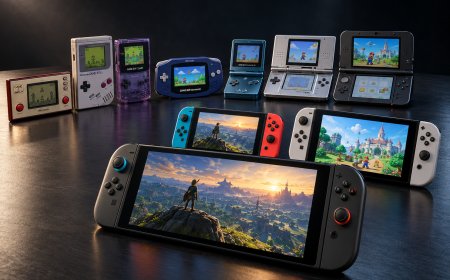
The handheld market has precedent for this approach. Display upgrades can extend the life of an established device without forcing a complete redesign, particularly when the existing processor and software platform remain sufficient for the product’s core purpose.
The Portal is a different product than it was at launch
An upgraded Portal would arrive in a much stronger software environment than the original model faced in 2023. Sony initially positioned the device primarily as a Remote Play companion for a PS5, meaning the console handled the game while the Portal displayed the streamed output.
That limitation has gradually loosened. Sony officially expanded cloud streaming on PlayStation Portal in November 2025, allowing PlayStation Plus Premium members to stream supported PS5 games directly from the cloud. Select digitally owned PS5 games can also be streamed without connecting the Portal to a user’s own PS5 console.
That change significantly altered the argument for the hardware. The Portal still isn’t a conventional handheld console running PS5 games locally, but it can now operate with far less dependence on a nearby PS5 than it did at launch.
Sony continued improving the experience in 2026 with a 1080p High Quality mode for Remote Play and cloud streaming. The mode uses a higher bitrate than the standard 1080p setting, emphasising visual quality when the network connection can support it.
Those improvements make an upgraded screen more worthwhile. Higher-quality streaming is more useful when the display can show it convincingly, and an OLED panel gives Sony a straightforward way to make the hardware feel more premium without changing the fundamental streaming architecture.
Android 15 is noteworthy, but it does not prove a broader handheld strategy
The certification information reportedly lists Android 15 for both mystery products. The existing Portal also uses an Android-based software foundation, so Android’s presence does not necessarily mean Sony is turning the device into an open handheld capable of running native Android games or applications.
It is more reasonable to view Android 15 as evidence of a newer system base unless Sony says otherwise. The Portal’s software experience is deliberately controlled around PlayStation services, and there is currently no verified indication that the CFI-Y2000 or CFI-Y2105 hardware changes that philosophy.
This is also why comparisons with a hypothetical portable PS5 should be treated carefully—the Portal streams games. A true PlayStation handheld capable of executing modern PlayStation software locally would require a fundamentally different hardware architecture, power budget and software strategy.
The lack of Wi-Fi 6GHz support is surprising
If these certifications do belong to a next-generation Portal, the networking details may be the least exciting part. The devices reportedly remain limited to the 2.4GHz and 5GHz bands and use a 1x1 wireless configuration.
For a product built almost entirely around streaming, stronger wireless hardware would have been an obvious area for improvement. Support for the 6GHz band could potentially provide access to less congested spectrum in compatible Wi-Fi environments, while a more capable antenna configuration could offer additional flexibility.
That does not mean the new hardware would stream poorly. Sony has already shown that much of the Portal experience can be improved through software, bitrate management, and network optimisation. But if the certifications represent the final wireless configuration, an OLED screen may be a more visible upgrade than the networking hardware.
Two model numbers do not necessarily mean two different Portals
The appearance of CFI-Y2000 and CFI-Y2105 has also prompted speculation that Sony could be preparing two separate Portal configurations. That is possible, but there is not enough evidence to reach that conclusion.
Consumer electronics manufacturers regularly use different model numbers for regional variants, hardware revisions or regulatory differences. Sony already sells existing Portal variants under different identifiers, so two certification entries should not automatically be interpreted as a standard model and a premium OLED model.
Until Sony announces the devices, their relationship remains unknown. One could be a regional variant of the other, they could represent different hardware configurations, or they could ultimately belong to products that are not marketed as Portal devices at all.
What looks promising
Pros:
- The new CFI-Y2000-series model numbers provide credible evidence that Sony is preparing unannounced PlayStation hardware.
- An OLED display would be a logical upgrade for the Portal’s streaming-focused design if the existing rumours prove accurate.
- PlayStation Portal now has a stronger software foundation thanks to expanded cloud streaming and improved 1080p streaming options.
- Sony could improve the display without abandoning the familiar DualSense-style controls that distinguish the current Portal.
Cons:
- The certification records do not confirm an OLED display.
- Sony has not officially identified CFI-Y2000 or CFI-Y2105 as PlayStation Portal models.
- The disclosed wireless configuration does not indicate a major Wi-Fi upgrade.
- Pricing, battery life, screen specifications, release timing and other hardware details remain unknown.
Final Verdict
The new Sony certifications make a PlayStation Portal hardware refresh look increasingly plausible, but they do not yet prove the existence of a PlayStation Portal OLED. The strongest evidence is the move from the existing Y1000-series identifiers to CFI-Y2000 and CFI-Y2105, combined with their classification as PlayStation gaming hardware and their Android 15 software base.
An OLED Portal would make strategic sense. Sony has spent the past several years turning the Portal from a narrowly focused PS5 Remote Play accessory into a more flexible streaming device, and the current 8-inch LCD is the obvious next upgrade. A richer display paired with cloud streaming and the newer high-quality 1080p mode could make the hardware considerably more appealing without requiring Sony to build an entirely new type of handheld.
But the distinction between evidence and expectation remains important. No verified OLED specification, confirmed price, or official Sony announcement ties either certification directly to a new Portal. Until that changes, the CFI-Y2000 and CFI-Y2105 filings are best viewed as strong evidence of new PlayStation hardware and an encouraging clue for Portal owners, not confirmation that an OLED model is ready to launch.
What's Your Reaction?
 Like
0
Like
0
 Dislike
0
Dislike
0
 Love
0
Love
0
 Funny
0
Funny
0
 Angry
0
Angry
0
 Sad
0
Sad
0
 Wow
0
Wow
0