



































Silent Hill Townfall and Resident Evil Lead a New Era for Horror Games
Silent Hill Townfall and Resident Evil show how major horror franchises are evolving with new settings, gameplay styles, and renewed interest from modern audiences.
Horror gaming is entering another strong period, with major franchises finding new ways to expand beyond the formulas that originally made them famous. Silent Hill: Townfall and Resident Evil Requiem represent two different approaches to that evolution: one pushing psychological horror into a new first-person setting, and the other blending survival horror with a broader, action-oriented experience.
The timing is significant for both series. Silent Hill has returned with several new releases and remakes after years of limited activity, while Resident Evil has continued to alternate between remakes and new entries. The result is a horror market where established franchises are once again experimenting with perspective, setting, technology, and storytelling.
Silent Hill Is Expanding Beyond Its Original Formula
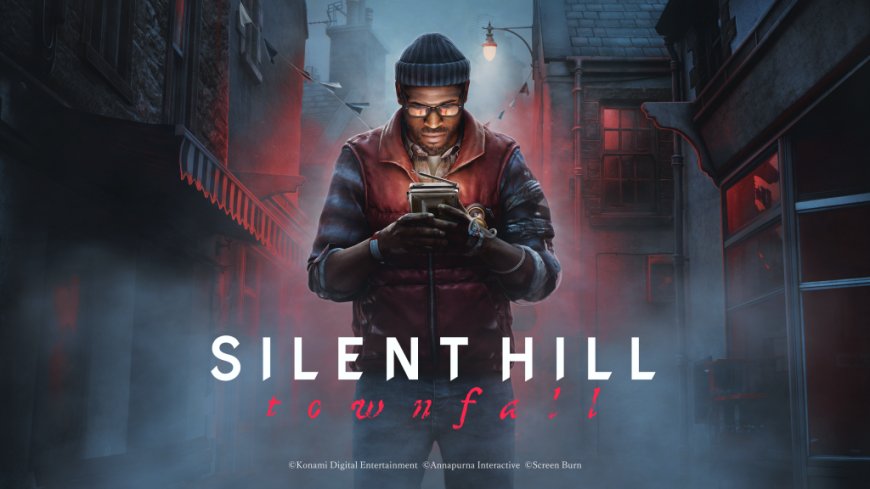
Silent Hill: Townfall takes the series in a different direction while keeping psychological horror at its centre. Developed by Scottish studio Screen Burn Interactive, the game is set on the isolated island of St. Amelia in 1996. It follows Simon Ordell as he investigates a disturbing connection to the location.
The game is played entirely from a first-person perspective, making Townfall the first full-length first-person entry in the Silent Hill series. Players explore, evade enemies, solve narrative-driven puzzles, and use a limited collection of weapons and tools while trying to understand what is happening around them. Konami’s official launch announcement confirms the game’s September 24, 2026 release on PS5, Steam, and the Epic Games Store.
Townfall Uses First-Person Horror Differently
The first-person perspective changes how players experience Silent Hill’s environments. Instead of seeing the protagonist from behind, players are placed directly inside Simon’s viewpoint, which can make enclosed spaces, limited visibility, and enemy encounters feel more immediate.
Screen Burn also builds gameplay around evasion and investigation rather than constant combat. The game includes a CRTV that can tune into unstable signals, while environmental puzzles gradually reveal more about the island and Simon’s connection to it.
PlayStation’s gameplay overview describes Townfall as an attempt to evolve the series’ narrative design while introducing a new town, new enemies, and story-driven puzzles.
The Silent Hill Revival Has Become Broader
Townfall is arriving after the successful return of Silent Hill 2 and the launch of Silent Hill f. Konami reported that the Silent Hill 2 remake had surpassed five million worldwide players as of January 31, 2026, while Silent Hill f had surpassed two million units shipped by April 22.
Those releases also show the franchise can explore different settings without abandoning its psychological-horror identity. Silent Hill 2 revisited an established story, while Silent Hill f moved the series to 1960s Japan. Konami’s Silent Hill f sales announcement confirms the game’s two-million-unit milestone.
Townfall continues that pattern by moving the story to Scotland and changing the gameplay perspective. Rather than treating Silent Hill as a single fixed formula, Konami and its development partners are using the franchise as a framework for different interpretations of psychological horror.
Resident Evil Has Taken a Different Path
Resident Evil’s recent evolution has followed a different model. Capcom has combined remakes of established games with new mainline entries, allowing the franchise to preserve recognisable survival-horror elements while changing perspective, pacing, and gameplay systems.
Resident Evil Requiem is the latest example. Released in February 2026, the game uses Capcom’s RE Engine and supports both first-person and third-person perspectives. It also combines exploration, combat, and survival-horror elements around its two-protagonist structure.
Capcom reported in March that Resident Evil Requiem had exceeded six million units worldwide, reaching that milestone faster than any previous game in the series. The company also said it planned additional content for the game.
Resident Evil Is Balancing Horror and Action
The modern Resident Evil formula is no longer limited to the slower survival-horror structure associated with the earliest games. Requiem lets players switch between first-person and third-person perspectives, giving them more control over how they experience combat and exploration.
That flexibility reflects a broader approach from Capcom. The company continues to emphasise fear and survival while also building games that can support larger action sequences and more cinematic presentation.
Capcom’s use of the RE Engine has also allowed the series to push visual realism, character detail, lighting, and environmental presentation. Requiem therefore represents both a continuation of Resident Evil’s survival-horror identity and a technical evolution of the franchise.
Two Franchises, Two Approaches to Modern Horror
Silent Hill and Resident Evil are now moving in noticeably different directions. Townfall emphasises psychological tension, environmental investigation, evasion, and narrative puzzles, while Resident Evil Requiem blends survival-horror ideas with broader action and perspective options.
That difference matters because the current horror market no longer depends on one specific gameplay structure. Developers can use first-person presentation, third-person combat, environmental storytelling, cinematic visuals, stealth, puzzles, or traditional survival-horror systems without abandoning a long-running franchise’s identity.
Why This Matters for Horror Games
The renewed activity around these franchises also creates more room for experimentation. Silent Hill’s recent releases have demonstrated that the series can work with different cultures, locations, characters, and gameplay structures. Resident Evil has shown that a long-running survival-horror franchise can continue expanding while maintaining a large mainstream audience.
For players, that means the current generation of horror games is becoming less predictable. Established names provide recognisable foundations, but developers increasingly use them to explore different styles rather than simply repeating earlier entries.
Pros and Cons
Pros:
- Silent Hill: Townfall introduces a new setting and first-person perspective to the series
- Townfall combines exploration, evasion, combat, and narrative-driven puzzles
- Silent Hill has expanded through different settings and storytelling approaches
- Resident Evil Requiem combines first-person and third-person perspectives
- Both franchises continue to invest in modern graphics and immersive presentation
- Recent releases have created more variety within the horror genre
Cons:
- Townfall’s move toward first-person gameplay may feel different from traditional Silent Hill entries.
- Different gameplay approaches across the franchise can create less consistency between individual Silent Hill games.
- Resident Evil’s larger action elements may not appeal to players seeking a slower traditional survival-horror experience.
- Both franchises now rely heavily on experimentation to maintain their identities across new releases.
Final Verdict
Silent Hill: Townfall and Resident Evil Requiem show how two of gaming’s most recognisable horror franchises are adapting without simply repeating their past. Townfall uses first-person exploration, evasion, puzzles, and psychological horror to offer a new take on Silent Hill. At the same time, Requiem continues Resident Evil’s blend of survival horror, action, and cinematic presentation.
The wider significance is the amount of experimentation now happening within established horror franchises. Silent Hill has moved between Japan, Scotland, and its traditional psychological-horror foundations, while Resident Evil continues to adjust its perspective and balance between fear and action.
For horror fans, that variety gives the genre more room to evolve. The strongest sign of the current revival is not that these franchises are returning to their old formulas, but that they are finding new ways to use those foundations for modern audiences.
What's Your Reaction?
 Like
0
Like
0
 Dislike
0
Dislike
0
 Love
0
Love
0
 Funny
0
Funny
0
 Angry
0
Angry
0
 Sad
0
Sad
0
 Wow
0
Wow
0