





























Google Pixel 11 Pro & Pro XL First Look: A Bigger Upgrade
Google Pixel 11 Pro and Pro XL bring Tensor G6, upgraded cameras, 120x Pro Zoom, brighter displays, faster charging and new Gemini Intelligence features.
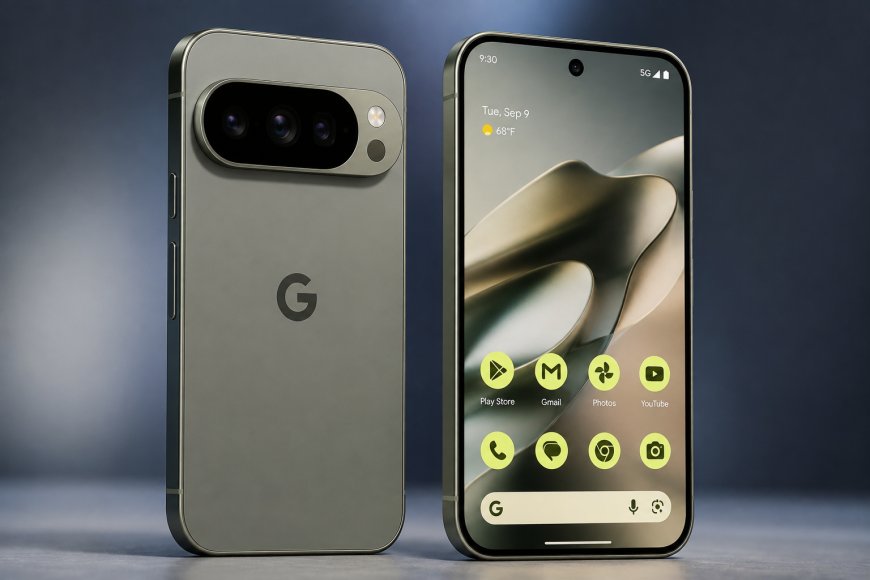
Google’s Pixel 11 Pro and Pixel 11 Pro XL arrive with a familiar flagship formula, but the changes go deeper than a simple annual refresh. The new Pro phones combine Google’s Tensor G6 chip with upgraded camera hardware, brighter displays, faster charging, new Gemini-powered features and a redesigned notification system called HiLight.
Google unveiled the Pixel 11 series on Aug. 12, with the Pixel 11 Pro starting at $1,099 in the U.S. and the Pixel 11 Pro XL starting at $1,299. Both models go on sale Aug. 20.
The biggest decision between the two Pro models is still size. The core processor, camera system, and AI features are largely shared, while the Pro XL offers a larger display, a bigger battery, and faster wired charging.
A Familiar Pixel Design With Useful Refinements
The Pixel 11 Pro keeps the compact flagship approach with a 6.3-inch body, while the Pixel 11 Pro XL moves up to a 6.8-inch display.
Google offers both phones in Canyon, Olive, Fog and a matte Obsidian finish. The Pro measures 152.7 x 71.9 x 8.4 mm and weighs 204 grams. The Pro XL measures 162.7 x 76.5 x 8.5 mm and weighs 226 grams.
Google has retained the recognisable horizontal Pixel camera design while refining the overall hardware. The company says the Pro models use a new anti-scratch display coating that provides more than twice the scratch resistance of the previous generation.
One of the more unusual additions is HiLight.
HiLight uses colored LED lighting around the camera flash to provide information while the phone is face down. It can indicate when Gemini is listening, thinking or responding, and users can assign colours to important callers. Google says additional notification capabilities are planned.
It is a small hardware feature, but it gives the Pixel 11 Pro series something genuinely different from the usual collection of software-only upgrades.
Super Actua Displays Get Brighter
The Pixel 11 Pro uses a 6.3-inch Super Actua LTPO OLED display with a 1280 x 2856 resolution, while the Pro XL has a 6.8-inch 1344 x 2992 panel.
Both displays support an adaptive refresh rate from 1Hz to 120Hz and reach up to 2,400 nits for HDR content and 3,600 nits of peak brightness. Gorilla Glass Victus 2 is used on the front, together withGoogle’ss new anti-scratch treatment.
There is no major feature advantage for the XL display beyond its additional size. Someone who wants a more compact phone can choose the Pixel 11 Pro without giving up the high refresh rate, peak brightness or core panel technology.
The Pro XL gives videos, games, editing tools and multitasking more physical room.
Tensor G6 Is the Centre of the Upgrade
Both models are powered by Google’s new Tensor G6 processor and Titan M3 security coprocessor.
Google calls the Tensor G6 its fastest and most powerful Pixel chip to date. According to the company, its upgraded CPU can deliver 25% faster web browsing and 15% quicker application launches compared with Tensor G5.
The bigger emphasis, however, is AI.
Google says Tensor G6 provides 50% more TPU compute. Paired with the latest Gemini Nano model, the company claims on-device AI workloads can run up to 3.5 times faster while using up to 3.5 times less energy. Those figures are Google’s own performance claims and will need independent testing under real-world conditions.
Storage now begins at 256GB on both Pro phones.
The 256GB versions have 12GB of RAM, while the 512GB and 1TB configurations increase memory to 16GB. Google also lists Zoned UFS storage on the 512GB and 1TB versions.
For buyers planning to keep the phone for several years, the higher-memory configurations may be particularly interesting as more AI processing moves onto the device.
The Camera System Gets a Serious Upgrade
Camera performance remains one of the main reasons to consider a Pixel Pro, and Google has made several significant hardware changes this generation.
Both the Pixel 11 Pro and Pro XL use the same triple rear-camera configuration:
- 50MP main camera with a 1/1.3-inch sensor
- 48MP ultrawide camera with autofocus and Macro Focus
- 48MP telephoto camera with 5x optical zoom
- 42MP autofocus front camera
The telephoto sensor is one of the more important changes. Google says the redesigned telephoto camera has a larger sensor with 30% greater light sensitivity. Portrait Mode can now also operate at 5x zoom.
Google has also pushed its computational zoom considerably further.
The Pixel 11 Pro models support Pro Zoom up to 120x, while Google lists optical-quality results at 0.5x, 1x, 2x, 5x and 10x. The extreme 120x setting relies heavily on computational imaging rather than optical magnification alone.
Tensor G6 and Google’s updated imaging models are responsible for much of that processing.
That means 120x should not be interpreted as equivalent to a physical 120x optical lens. The useful question will be how much detail Google’s processing can preserve at the longer digital zoom ranges.
Night Sight Gets Much Faster
Low-light photography is another area where Google is promising a noticeable improvement.
The Pixel 11 Pro and Pro XL introduce Instant Night Sight, which Google says can capture Night Sight images up to 4.5 times faster than previous Pixel generations while maintaining image quality.
Reducing capture time matters in practice because traditional long-exposure night modes can struggle with moving subjects or camera shake.
Google has also added Camera Looks, giving users several different photographic styles directly at the time of capture. The available options include Natural, Shadows and Vanilla as default alternatives, plus Digi, Black Tie, Minimal, Editorial, Classic and Velvet.
The phones retain familiar Pixel photography features such as Macro Focus, Astrophotography, Pro controls, Best Take, Real Tone, Long Exposure, Action Pan, Magic Eraser and Zoom Enhance.
Magic Capture Uses AI Before You Miss the Shot
One of Google’s more ambitious camera additions is Magic Capture.
Instead of simply applying AI after a photo is taken, Magic Capture analyses a burst of frames to identify the appropriate moment.
Google says a typical Magic Capture session can analyse around 400 frames using on-device intelligence and Gemini models before producing selected 12MP images. It can also automatically crop or unblur the result and preserve video from the same moment.
The idea is particularly relevant for unpredictable subjects such as children, pets and sports, where pressing the shutter a fraction of a second too late can ruin the image.
Its effectiveness will depend on how consistently Google’s AI selects the same moment a photographer would select manually.
Video Gets More Creator-Focused
The rear cameras support 4K recording at up to 60 fps and 8K recording at 24 or 30 fps via Video Boost. The front camera can record 4K at up to 60 fps.
Google has also introduced a Creator Suite aimed at people producing social video directly on their phones.
It includes an on-screen teleprompter that scrolls along with the speaker, social media framing guides, project folders, and Storyboard tools for trimming and rearranging clips. Users can also make video the default mode when Pixel Camera opens.
Those additions may be more useful to regular content creators than another isolated increase in camera specifications.
Gemini Intelligence Moves Deeper Into the Phone
The Pixel 11 series is designed around what Google calls Gemini Intelligence, and Tensor G6 gives more of those AI functions access to on-device processing.
Google says Gemini can work across more than 40 apps for multistep tasks, although feature availability varies by language, country and account, and some higher usage levels may require a subscription.
One new feature is Rambler, a Gemini-powered voice input system designed to turn informal speech into cleaner written text, including speech containing filler words.
Gboard is also gaining sign-to-text functionality in supported markets. At the same time, contextual cards can surface travel information, calendar suggestions, locations and other details based on what a user is doing.
The Pro models include Gemini Intelligence, Gemini Nano, Gemini Live and access to Gemini apps. Google is also including six months of Google AI Pro with its new Pro phones, subject to eligibility and regional conditions.
These features show Google’s wider strategy for Pixel. The phone is increasingly being designed around AI that works across applications rather than as a separate chatbot that users need to open manually.
Battery and Charging Favour the Pro XL
Battery capacity is one of the clearest hardware differences between the two models.
The Pixel 11 Pro has a typical 4,850mAh battery, while the Pixel 11 Pro XL has a 5,115mAh battery. Google rates both for more than 30 hours of battery life under its testing conditions.
The Pro supports charging to 55% in about 30 minutes with a compatible 30W or higher USB-C PPS charger.
The Pro XL reaches up to 75% in about 30 minutes when paired with a compatible 45W or higher charger.
Both also support PixelSnap wireless charging using the Qi2.2 standard at up to 25W.
For buyers choosing between the two phones, battery capacity and faster wired charging provide stronger practical reasons to choose the XL than processor or camera differences, since those core components are shared.
Pixel 11 Pro vs Pro XL: Which One Makes More Sense?
The Pixel 11 Pro is the more compact option and still provides Google’s full flagship camera system, Tensor G6, 120x Pro Zoom, Gemini Intelligence and the same 3,600-nit display technology.
The Pixel 11 Pro XL adds a 6.8-inch screen, a larger battery and faster wired charging.
That makes the decision relatively straightforward.
Choose the Pixel 11 Pro if you prefer a smaller flagship without sacrificing the main Pro features.
Choose the Pixel 11 Pro XL if screen size and battery capacity matter more than portability.
The $200 difference in U.S. starting price puts additional pressure on the XL to justify its larger footprint.
Is the Pixel 11 Pro a Big Upgrade?
On paper, the Pixel 11 Pro generation delivers meaningful changes rather than one headline specification.
Tensor G6 improves the platform behind Google’s on-device AI. The telephoto camera receives a larger sensor. Pro Zoom stretches to 120x. Night Sight gets substantially faster. Charging improves, the displays become brighter, and HiLight introduces a new way to receive notifications without constantly looking at the screen.
What remains uncertain from a first look is how much those improvements change everyday use.
Claims around Tensor G6 performance, battery endurance, extreme zoom quality and computational photography will require extended independent testing. Camera samples can show what the hardware is capable of, but consistency across difficult lighting, motion, and longer zoom ranges matters more than a single successful image.
Still, the Pixel 11 Pro and Pro XL makeGoogle’ss flagship direction clear. Hardware improvements remain important, but Google is increasingly designing the entire phone around cameras, on-device AI, and Gemini working together rather than treating AI as an additional software feature.
What's Your Reaction?
 Like
0
Like
0
 Dislike
0
Dislike
0
 Love
0
Love
0
 Funny
0
Funny
0
 Angry
0
Angry
0
 Sad
0
Sad
0
 Wow
0
Wow
0