






























AI Memory Crunch Pushes Smartphone Prices Higher as Supply Tightens
Smartphone prices are climbing as AI server demand tightens memory supply, pushing DRAM costs higher and squeezing budget phone makers worldwide in 2026.
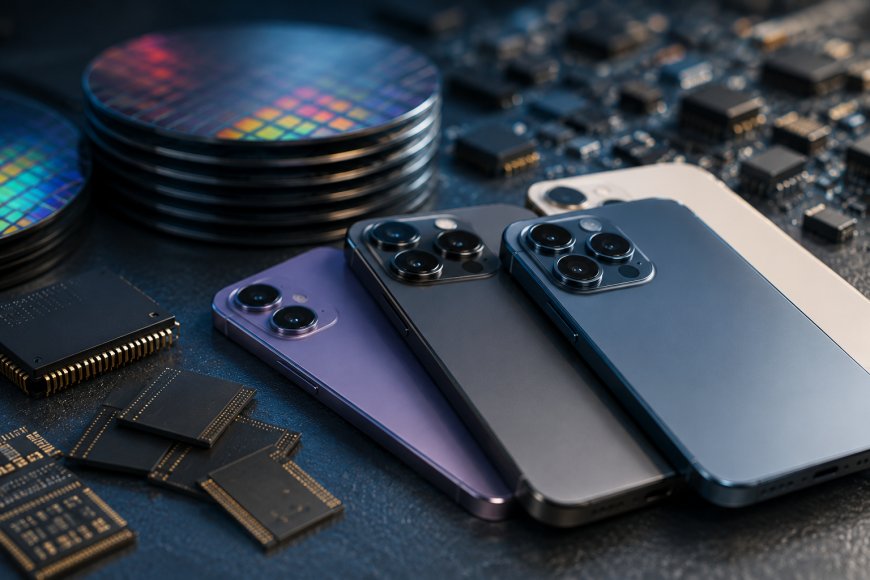
Smartphone prices are coming under growing pressure as the artificial intelligence boom reshapes the global memory market, leaving phone manufacturers competing for tighter supplies of critical components.
The effects are already showing up in the market. Global smartphone shipments fell 6.7% year over year to 277.5 million units in the second quarter of 2026, according to IDC. The research firm has identified the memory crisis as a major force dividing the market, with manufacturers facing higher costs and increasingly difficult decisions over pricing and hardware.
The problem goes beyond a temporary increase in component prices.
AI Servers Are Changing the Memory Market
The rapid buildout of AI infrastructure has increased demand for high-performance memory used in servers and accelerators. Memory manufacturers have responded by directing more production capacity toward server products and other higher-value applications.
That shift has consequences for smartphones.
TrendForce reported in July that memory capacity continues to move toward AI servers, squeezing the availability of mobile DRAM. The research firm said depleted supplies of lower-cost memory are forcing price increases and affecting smartphone demand.
Its latest DRAM market research also shows suppliers maintaining elevated pricing as capacity remains tilted toward servers.
For smartphone manufacturers, memory is not an optional component. Modern devices require substantial amounts of DRAM to run applications and operating systems, as well as flash storage for apps, photos, and other data. When those components become more expensive, manufacturers either have to absorb the additional cost or pass some of it to consumers.
Budget Smartphones Face Greater Pressure
The squeeze is especially significant for affordable smartphones.
Premium phone makers generally have more room within their margins to manage changes in component costs. Companies competing at lower price points have far less flexibility.
That can leave manufacturers choosing between higher retail prices, reduced memory or storage configurations, cheaper components, or narrower profit margins.
TrendForce says some midrange and lower-end brands are increasingly considering downgraded or refurbished memory components to preserve price competitiveness amid rising costs.
IDC’s first-quarter data showed the pressure developing earlier in the year. Worldwide smartphone shipments declined 2.9% year over year to 293.8 million units in Q1 2026, ending a run of 10 consecutive quarters of growth. IDC cited limited memory supply and record-high memory prices as pressures on smartphone makers.
By the second quarter, the global decline had accelerated to 6.7%.
Higher Phone Prices May Not Disappear Quickly
There are signs that tight conditions could extend beyond this year.
TrendForce expects strong AI-server demand to continue putting pressure on DRAM supply into 2027. Although the outlook for NAND Flash may eventually become less constrained, the firm says cheaper NAND alone would provide limited relief to overall consumer-device component costs.
That means the smartphone industry’s pricing problem is increasingly tied to a much larger transformation in computing.
AI spending is usually associated with data centres, GPUs and cloud infrastructure. But the competition for semiconductor manufacturing capacity is spreading its effects further down the technology supply chain.
For consumers, the result could be straightforward: fewer aggressively priced smartphones, more expensive upgrades and compromises in specifications at the lower end of the market.
The AI infrastructure boom may be happening inside massive data centres, but part of its cost is increasingly reaching the smartphone in consumers’ hands.
What's Your Reaction?
 Like
0
Like
0
 Dislike
0
Dislike
0
 Love
0
Love
0
 Funny
0
Funny
0
 Angry
0
Angry
0
 Sad
0
Sad
0
 Wow
0
Wow
0